

When choosing an appropriate eye hospital, you may think, “I would like to receive the best eye care, but how can I choose?” At that time, you may start to compare hospitals, ask your relatives and friends, and read reviews on Google.
However, is that enough?
Are there any other aspects that you could pay attention to, rather than what you see online?
Yes. Each person has their own eye needs. Therefore, it is necessary to know what the hospital provides and whether it matches your requirements.
So, what should you actually pay attention to when choosing an eye hospital in Indore?
Here we explain the 12 most important aspects that can help you decide.
1. NABH Accreditation & Certification
As you are searching for an eye hospital, it is natural to want assurance that you are in a safe and good place. When you go for an appointment at a hospital, having some idea about NABH accreditation or other certifications may help you to know about the hospital’s safety and quality standards.
NABH stands for the National Accreditation Board for Hospitals & Healthcare Providers, meaning the eye hospital adheres to standards for providing patient care, hygiene, and safety.
2. Doctor Experience & Qualifications
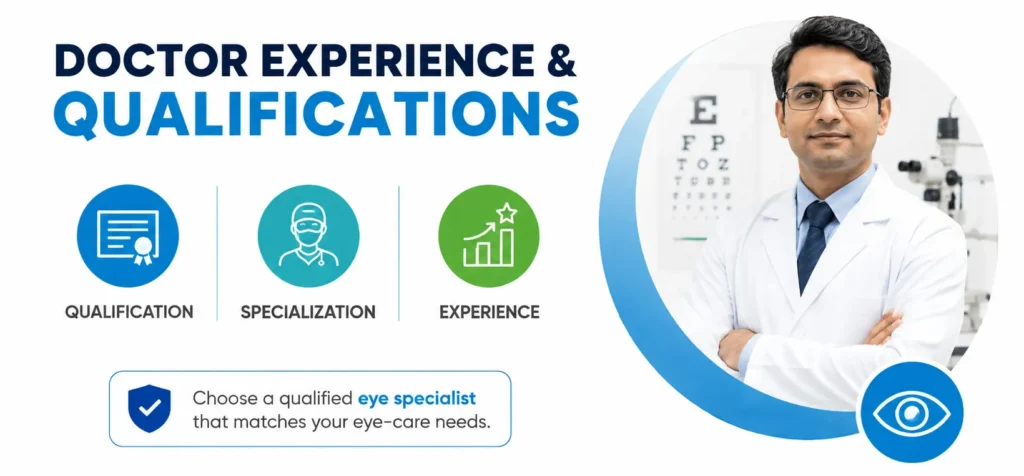
Choosing the right doctor is important for your eye care journey.
Before booking an appointment with an ophthalmologist in Indore, you must check:
- Qualification
- Specialization
- Experience
If you are looking for the best eye specialist in Indore, check whether their expertise matches your eye-care needs. For example, if you require cataract surgery, it is important to choose a qualified eye surgeon with prior experience in cataract surgery.
For example, the profile of Dr Mahesh Garg provides details about his qualifications, training, and experience in cataract and refractive eye surgery.
3. Range of Specialities Offered
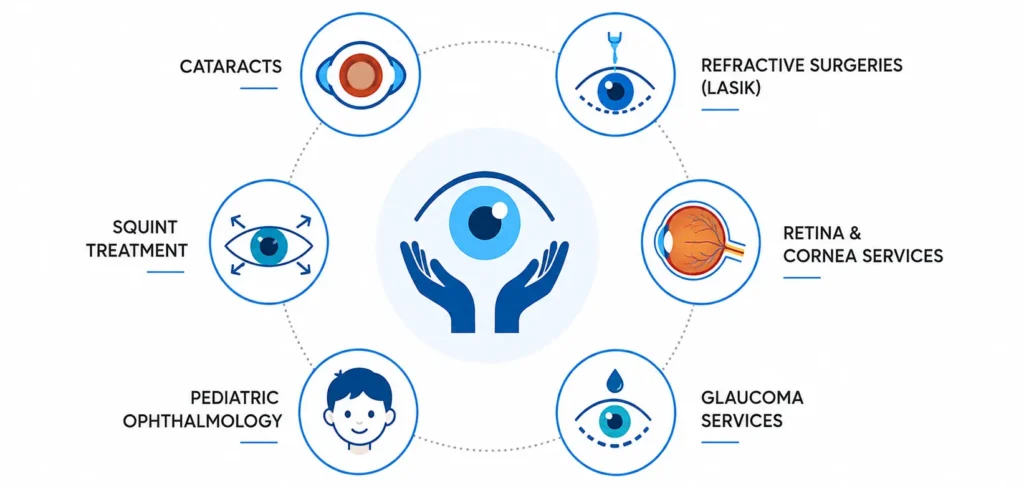
While comparing the best eye hospital in Indore, see if they provide the following specializations:
- Cataracts
- Refractive surgeries (LASIK)
- Retina and Cornea services
- Glaucoma services
- Pediatrics ophthalmology
- Squint treatment
All of these come together to meet various eye care needs under one roof.
4. Advanced Technology & Equipment
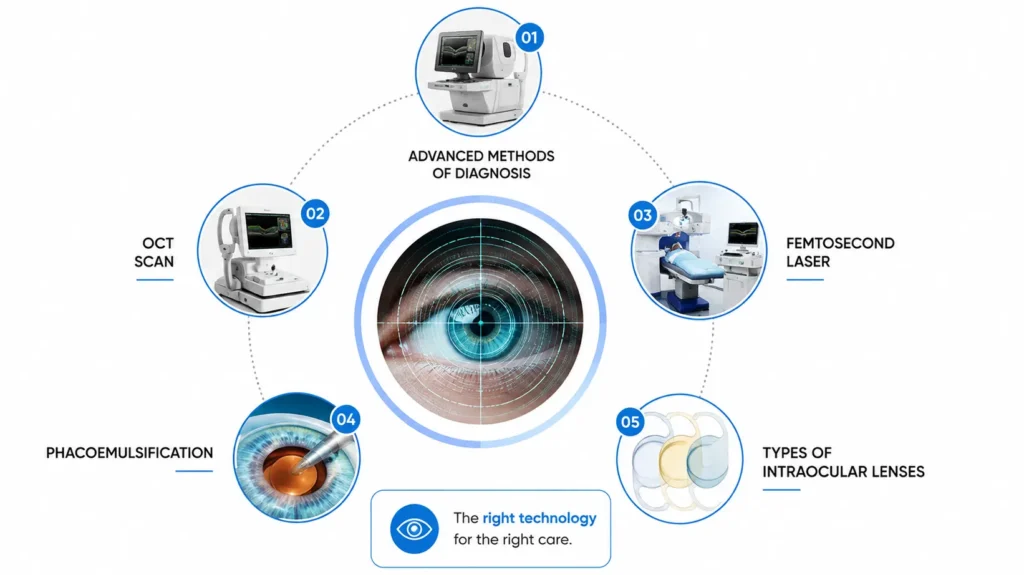
Equipment and technology used at an eye hospital can be used to diagnose the condition and also suggest suitable treatments for you, including:
- Advanced methods of diagnosis
- Optical Coherence Tomography (OCT) scan
- Femtosecond laser
- Phacoemulsification
- Types of intraocular lenses
OCT is also commonly used as part of glaucoma evaluation, helping doctors assess the optic nerve and retinal structures. Your goal is not simply to find a hospital with the newest equipment, but one that uses the right technology for your condition.
5. Success Rate & Surgical Track Record

If you plan to undergo eye surgery, it may be useful for you to know the level of experience of the hospital with surgical procedures.
For this, you may inquire about:
- Surgical experience
- Surgical outcome
- Possible complications
- Follow-up protocols
It is also important to note that individuals may have varying results after undergoing surgery. Your eye problem, age, and physical state can influence your surgery result.
6. Patient Reviews & Reputation
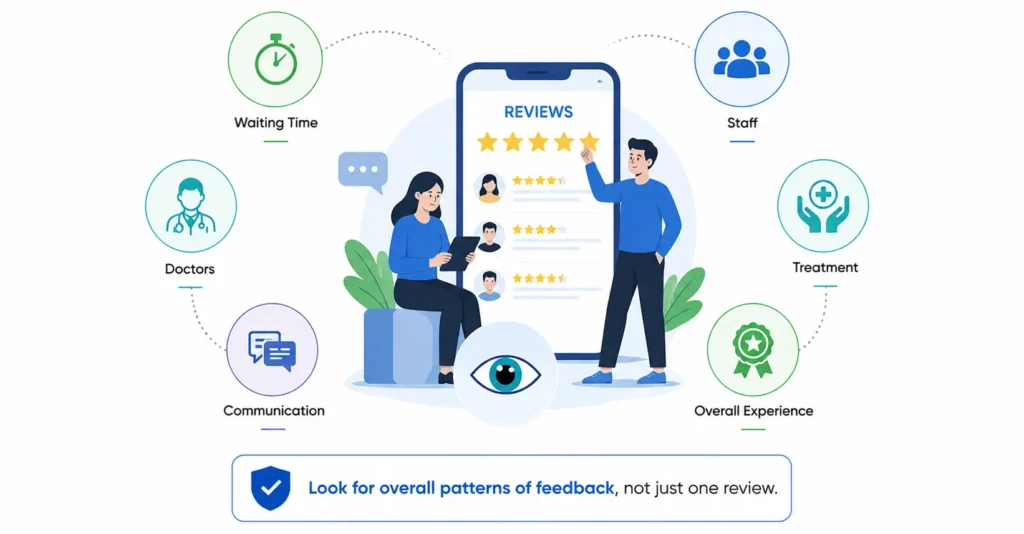
You should know what other patients have experienced before you visit an eye hospital. You can view reviews on Google or read testimonials posted by patients from the eye clinic.
These reviews can help you get some insight into what to expect when attending this clinic, including waiting time, staff, doctors, communication, and treatment. Try to pay attention to general patterns of feedback instead of relying on one review.
7. Location & Accessibility
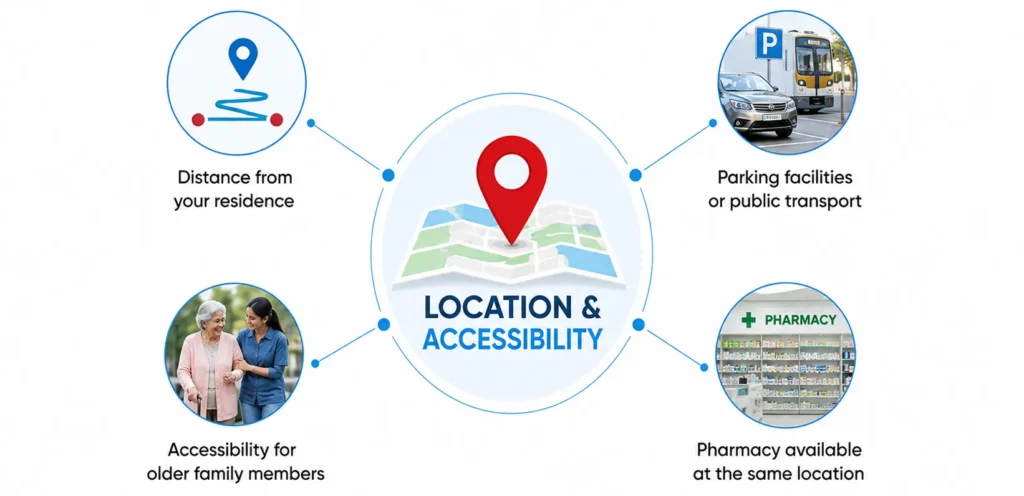
If you are searching for an eye doctor near me, choose a hospital that is convenient for regular check-ups and follow-ups.
Also consider the following aspects:
- Distance from your residence
- Availability of parking facilities or public transport
- Level of accessibility for older family members
- Availability of a pharmacy at the same location
8. Transparent Cost & Insurance Support
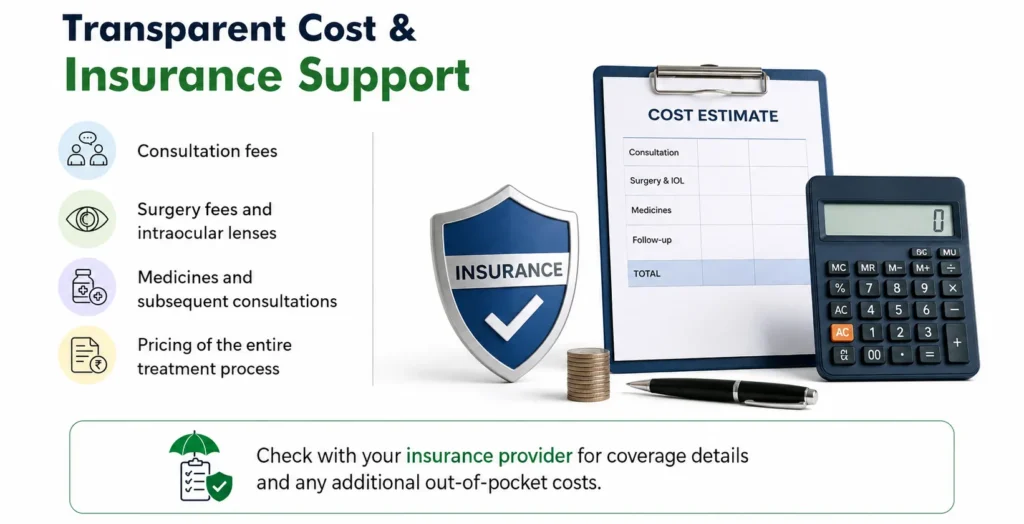
It is always advantageous for you to know in advance how much the treatment may cost. For cataract patients, the Cataract Surgery Cost in India guide explains the factors that can affect the overall treatment cost, including the surgical method and lens selection.
Similarly, people considering vision correction can review the information on LASIK eye surgery cost in Indore before comparing treatment options.
This may allow you to plan accordingly and prevent any misunderstandings in the future. Here are some questions that you should ask the hospital:
- Consultation fees
- Surgery fees and intraocular lenses
- Medicines and subsequent consultations
- Pricing of the entire treatment process
Before going ahead with any treatment process, ensure that you contact your insurance company for what your policy covers and whether any costs need to be paid separately.
You can also review the health insurance guidance from IRDAI to understand exclusions, waiting periods, co-payments, and other policy conditions.
9. Personalized Patient Care
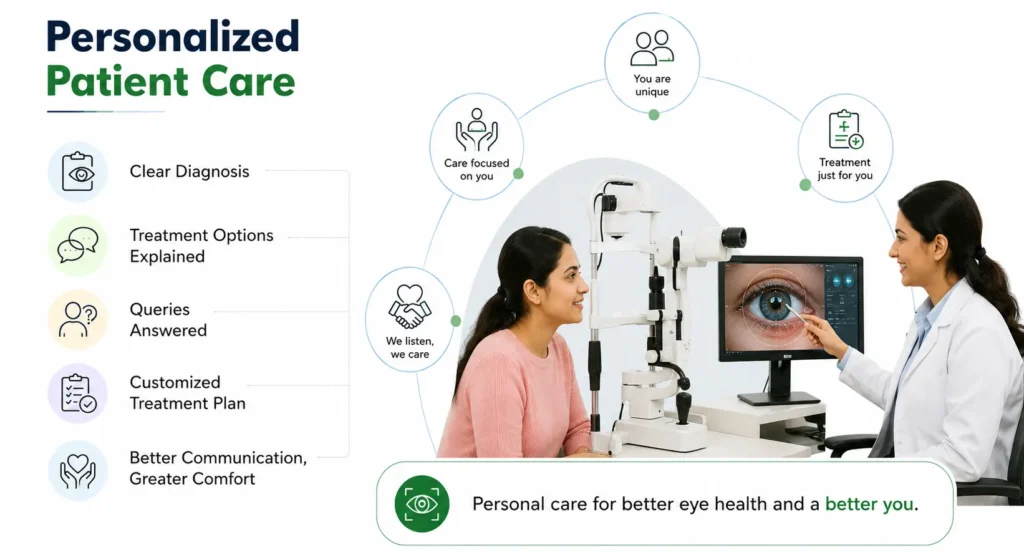
Every patient is different, so eye treatment should be planned according to your condition, age, lifestyle, and medical history.
Choose a hospital where you may be able to receive a clear diagnosis, have treatment options explained to you, have any queries answered, and have a customized treatment plan designed for you. Communication and care can also make you feel more comfortable during treatment.
10. Hygiene & Safety Standards
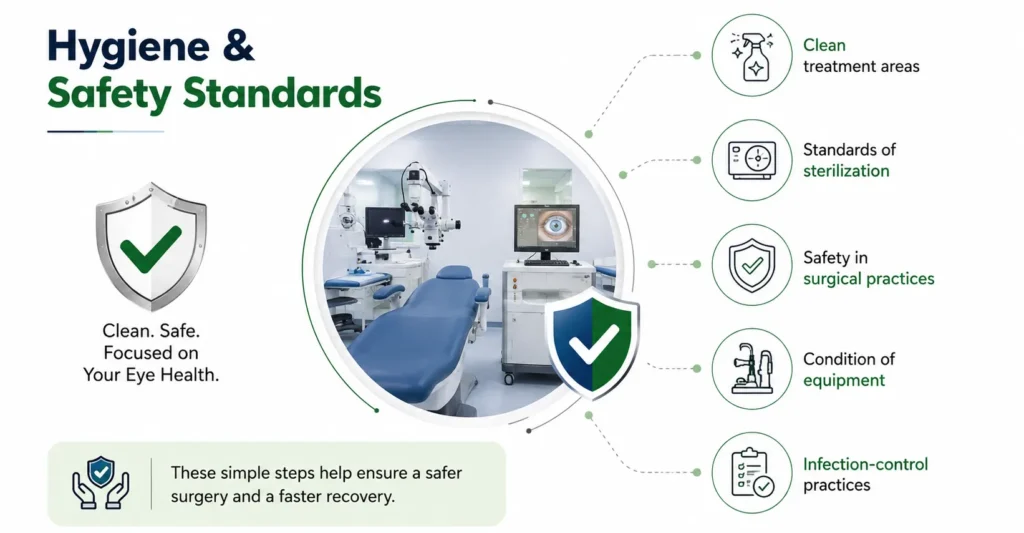
It is very important to have a clean and hygienic hospital while undergoing eye surgery.
Prior to selecting a hospital, check for some important factors, such as:
- Clean treatment areas
- Standards of sterilization
- Safety in surgical practices
- Condition of equipment
- Infection-control practices
All these simple considerations can help you avoid any type of infection during your eye surgery.
11. Emergency & Follow-Up Availability
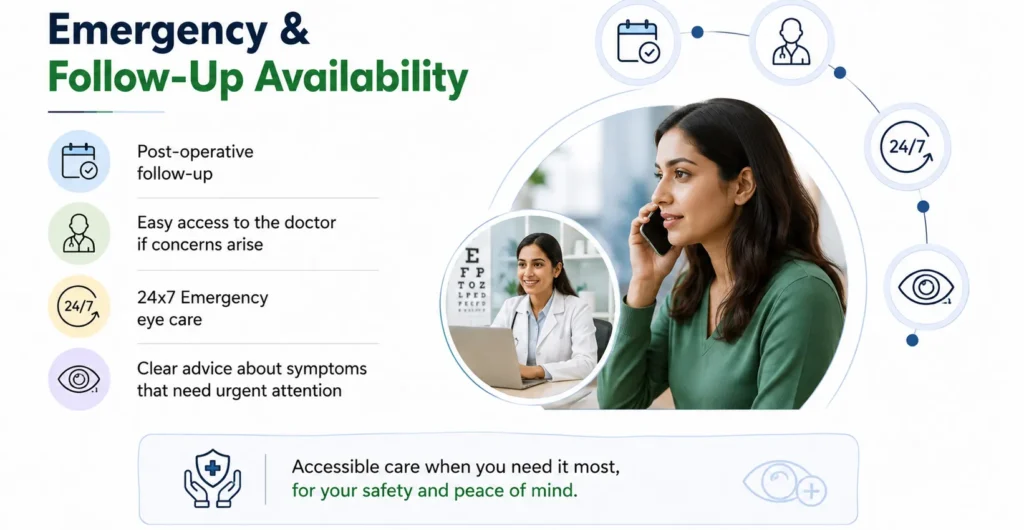
Good care after your eye treatment or surgery is important.
Before choosing a hospital, check whether it offers:
- Post-operative follow-up
- Easy access to the doctor if concerns arise
- 24×7 Emergency eye care
- Clear advice about symptoms that need urgent attention
For procedures such as retinal surgery, long-term monitoring may also form an important part of post-treatment care.
12. Pediatric & Family-Friendly Care

The need for eye care may vary among children, adults, and elderly family members.
When you want to select a hospital for your family, please see if it provides the following services, such as:
- Pediatric ophthalmology
- Squint correction for children and adults for eye alignment problems
- Routine Eyesight checkups for various ages
- Eye care for age-related conditions
Children with cataracts may also need early assessment, as untreated visual problems can affect normal visual development; see Paediatric Cataracts in Children for more information.
Expert Eye Care at Nihar Netralaya, Indore
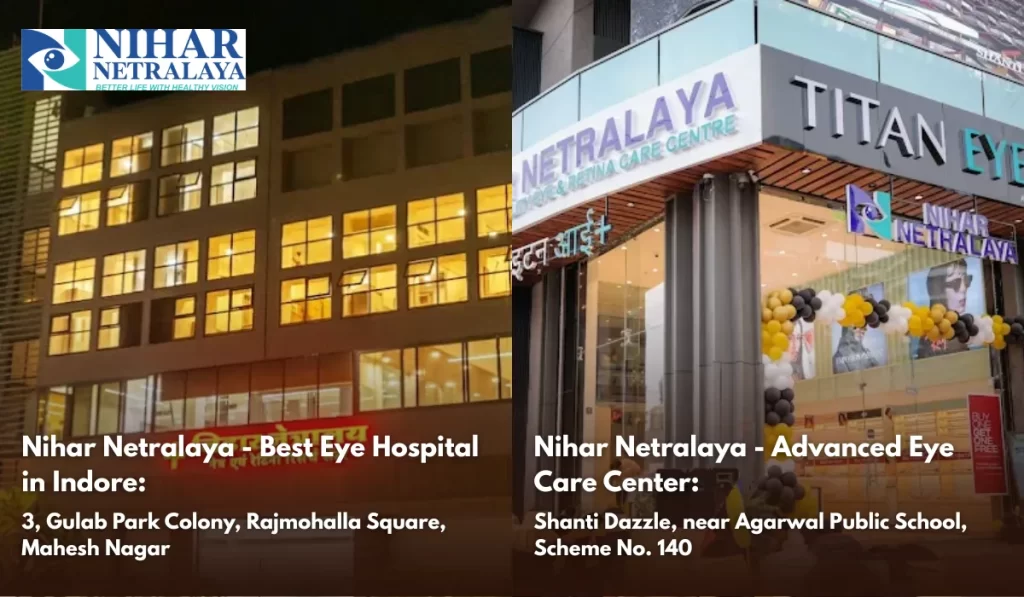
At Nihar Netralaya, Dr Mahesh Garg, Dr Nihar Garg, and the ophthalmology team provide care across different areas of eye health at an NABH-certified eye hospital in Indore.
Here is a quick look at the care and support you can find:
| What you may look for | At Nihar Netralaya |
| Experienced doctors | A team covering different areas of ophthalmology |
| Advanced diagnosis | Modern facilities for detailed eye examination |
| Vision correction | Femtosecond LASIK, PRK and ICL |
| Specialist services | Retina, glaucoma, cornea, pediatric, squint, oculoplasty and ocular oncology care |
| Eyewear support | Spectacles, different lens types and contact-lens fitting |
| Children’s eye problems | Pediatric ophthalmology and squint care |
| After-treatment care | Follow-up and guidance based on your recovery needs |
Final Thoughts: Making an Informed Choice for Your Eyes
Choosing the right eye hospital does not have to be confusing. By checking the doctors, specialities, technology, safety standards, costs, and aftercare, you can better understand your options. Taking a little time to compare these factors can help you choose suitable eye care with confidence.
FAQs
There is no single best type of eye doctor for everyone. An ophthalmologist is appropriate when you need medical or surgical treatment for an eye condition, while an optometrist generally handles routine eye examinations and vision correction. Your choice should depend on your symptoms, diagnosis, and treatment needs. The SERP sources similarly recommend matching the type of eye professional to the reason for your visit.
You can ask about the surgeon’s experience with the procedure, expected results, possible complications, available treatment options, type of technology or lens being used, total treatment cost, recovery time, and follow-up schedule. You should also ask what symptoms after surgery would require urgent medical attention.
Not necessarily. A larger hospital may offer more specialists and services, but the right choice depends on your specific eye-care needs. A hospital with the appropriate specialist, technology, surgical experience, and follow-up support may be more suitable for your condition.
NABH certification can be one factor to consider because it indicates that a hospital has been assessed against defined standards related to areas such as patient safety and quality of care. However, you should also consider the doctors, specialties, treatment facilities, and aftercare available at the hospital.
Check whether the hospital has diagnostic and treatment technology appropriate for your condition rather than simply looking for the newest equipment. Depending on your needs, this may include OCT, femtosecond laser technology, phacoemulsification systems, or different types of intraocular lenses.
An ophthalmologist is a medical doctor who can diagnose and medically or surgically treat eye diseases. An optometrist generally provides eye examinations, vision testing, and prescription for glasses or contact lenses. The appropriate professional depends on your eye-care needs.

[…] best IOL for cataract surgery depends on your vision goals and medical condition. Consult the best eye hospital near you to discuss the options for better eyesight solutions. He will help you choose the ideal […]
[…] measures to protect vision keeping away diabetic eye issues. For this reason, visiting the Best Eye Hospital in your area is strongly advised for regular screenings and early […]