

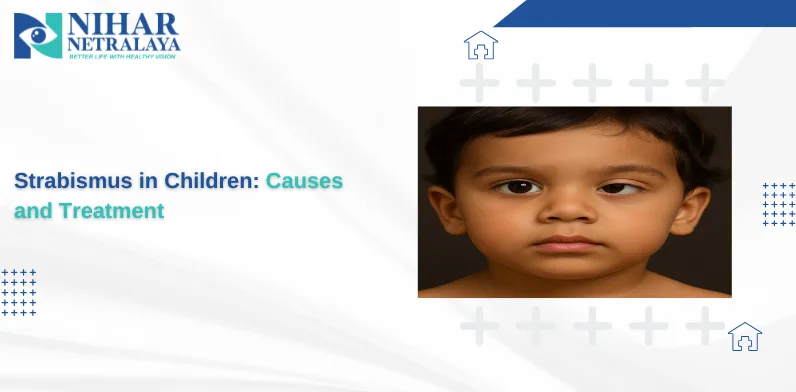
In India, squint is known by many names: भेंगापन (Bhengapan) in Hindi, konkannu in some South Indian languages, chakni eyes or bhengi eyes in local dialects. No matter what name your family uses, the condition is the same, and the good news is, it is very treatable. Whether your child is a newborn, a 2-year-old toddler or a 5-year-old about to start school, early detection and the right treatment can protect their vision for life.
Across India, among children under 12, about 14.8% had a squint. So squint eye treatment is one of the most common topics that parents discuss with us. When both the eyes do not look in the same direction, we call it a Squinted eye or Strabismus. It is common in young children. Today we will discuss why early squint eye care is very important and what steps will treat it successfully.
What is Squint?
In simple words, the eyes are misaligned. These do not focus on one object at the same time. When this does not happen, the brain receives two different images. This may confuse the child. The brain may even start ignoring the image from one eye. This can lead to amblyopia treatment India becoming necessary later.
Squint is different from a lazy eye. Lazy eyes are a result of ignoring vision from one side. Squint is the cause in many cases.
Squint by Age: What is Normal and What Needs Attention?
One of the most common questions parents ask us at Nihar Netralaya is, “My child is 3 years old and squinting. Is this normal?” The answer depends on the age and the pattern. Here is a simple guide:
| Child’s Age | What You May Notice | What It Means |
|---|---|---|
| Newborn (0–3 months) | Eyes wander or cross occasionally | Often normal; eyes are still developing coordination |
| 1 year old | One eye turns in or out consistently | Needs immediate eye check not normal after 4 months |
| 2 year old | Squinting one eye, tilting head | Needs immediate eye check, not normal after 4 months |
| 3 year old | Closing one eye in sunlight, eyes not aligned | Strong sign of squint; do not delay consultation |
| 4–5 year old | Complaints of double vision, rubbing eyes often | Must be checked before school starts |
| Any age | Sudden squint appearing overnight | Can be a sign of something serious see a doctor immediately |
Important: A squint that appears suddenly in a child of any age, especially if accompanied by headache or vomiting, should be treated as an emergency and evaluated without delay.
If you are unsure, the safest step is always to bring your child in for a check. Squint caught early responds far better to treatment than squint detected late.
Types of Squint Eye in Children
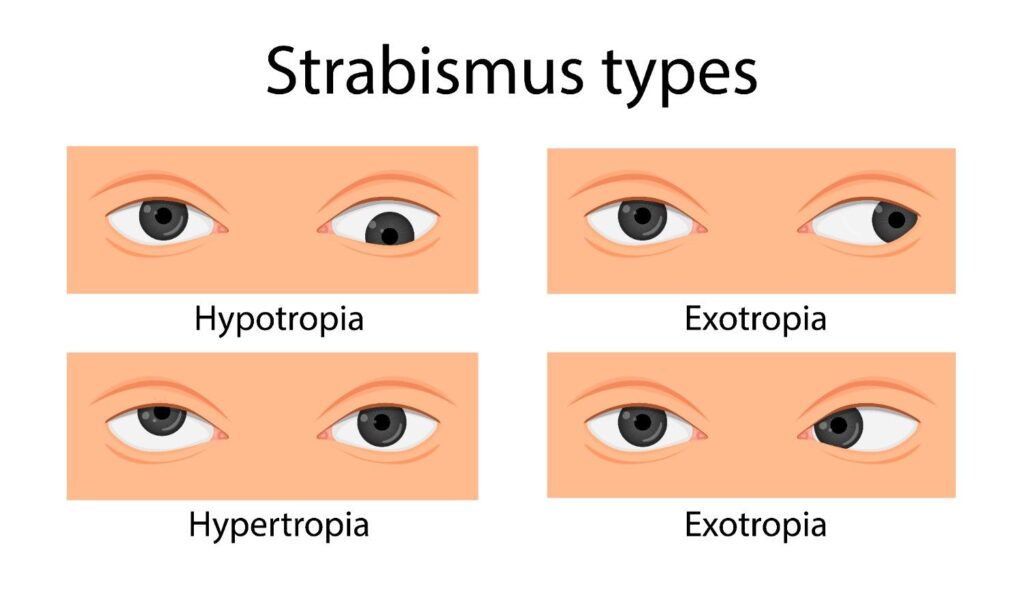
There are many types of squint in children. Some are constant, some appear only sometimes. Many parents ask, “What type of squint does my child have?” Here are the main types, explained simply:
| Type of Squint | What Happens | Also Called |
|---|---|---|
| Esotropia | Eye turns inward (towards the nose) | Convergent squint |
| Exotropia | Eye turns outward (away from nose) | Divergent squint |
| Hypertropia | Eye turns upward | Vertical squint |
| Hypotropia | Eye turns downward | Vertical squint (downward) |
| Latent Squint (Phoria) | Squint only appears when child is tired or unwell | Hidden squint |
| Infantile / Congenital Squint | Present from birth or within first 6 months | Squint eye by birth |
Is Squint Eye Hereditary?
Yes, squint can run in families. If a parent, grandparent or sibling has had a squint, the child’s risk is higher. However, having a family history does not mean the child will definitely develop it. Regular eye checkups from an early age are the best protection.
Causes of Squint in Children and Babies
Some squints appear soon after birth. Others develop later during childhood. A few common causes are:
- Family history of squint or refractive errors
- Farsightedness (hyperopia), the most common cause in young children
- Weak or unbalanced eye muscles
- Premature birth or low birth weight
- Neurological conditions affecting the brain or eye nerves
- Eye injuries or illness
Knowing the type and cause helps Dr Rishika Mutha plan the most effective squint treatment for your child.
Risk Factors & Who is More Prone
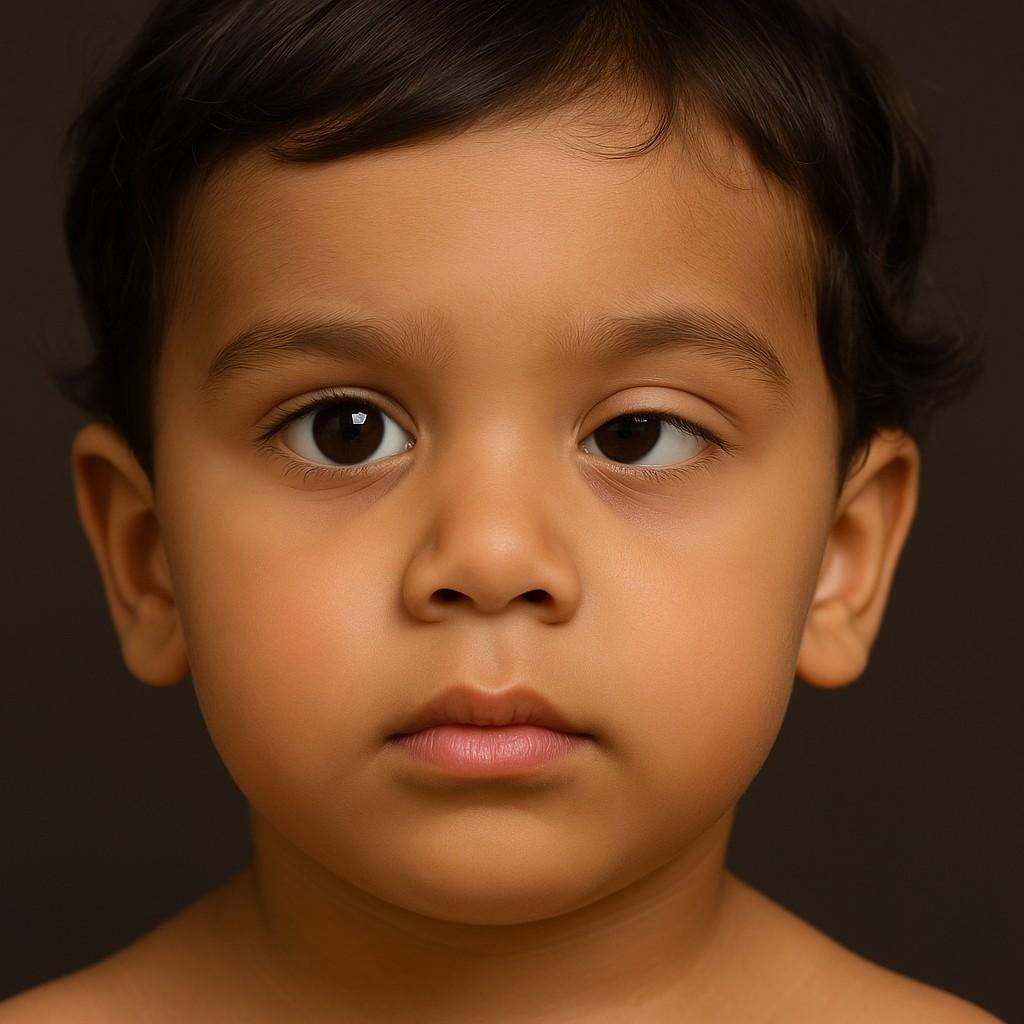
Children born early or with low birth weight are more likely to develop squint. A family history of eye squint in 3 year old or younger children also raises the chance.
Kids with poor vision in one eye may develop a squint. Neurological issues also play a role. Regular checkups reduce the risk of late detection.
Signs & Importance of Early Detection
Early detection of squint is vital. If ignored, the child may lose depth perception. Worse, the eyesight in one eye may weaken permanently. Parents should watch for signs like:
- Eyes not pointing in the same direction
- Frequent eye rubbing
- Tilting of the head
- Closing one eye in sunlight
- Complaints of double vision
Diagnosis & Tests Towards Squint Eye Treatment
An eye doctor checks alignment using a simple cover test. Vision is tested separately in each eye. In some cases, imaging or detailed tests are done. This step helps confirm if the problem is only squint or if there are other hidden issues. Diagnosis guides whether treatment of squint without surgery is possible.
Complications of Untreated Squint
- The commonest is amblyopia or lazy eye. The weaker eye is suppressed by the brain.
- Depth perception suffers. The child may face difficulty in games or later in jobs needing sharp vision.
- There is also a cosmetic effect or how the child looks; it can shake their confidence in social life.
Squint Eye Treatment Options
The options depend on the child’s age plus what kind of squint is there and the cause behind it. Following methods fall under treatment of squint without surgery, especially in small children, where chances of success are higher.
| Treatment Method | How It Works | Purpose / Benefit |
| Glasses | Corrects focusing problems caused by refractive error. | Often corrects squint without surgery in children. |
| Eye Patching | A patch is placed over the stronger eye to force the weaker eye to work. | Prevents and treats lazy eye (amblyopia). |
| Eye Drops | Used as an alternative to patching by blurring vision in the stronger eye. | Encourages the weaker eye to become active. |
| Exercises | Simple eye exercises prescribed by a doctor to strengthen eye muscles. | Improves muscle control and coordination. |
| Prisms | Specially designed lenses bend light to reduce double vision. | Helps eyes work together more comfortably. |
| Botulinum Toxin Injection | Relaxes tight eye muscles temporarily, allowing eyes to realign. | Used in select cases when muscles are too tight. |
Surgery is done by our Squint Specialist only if the above methods fail to correct the squint.
Squint Eye Treatment Without Surgery: Is It Possible?
Yes, in many cases, squint can be corrected without surgery. This is especially true in younger children where the visual system is still developing and responds well to non-surgical methods. The earlier the treatment starts, the higher the chance of avoiding surgery altogether.
Non-surgical treatment works best when:
- The squint is caused by a refractive error like farsightedness
- The child is young, and the squint has been detected early
- The squint is mild or intermittent (comes and goes)
If glasses, patching or exercises do not fully correct the squint after a fair trial period, surgery is then considered. Our specialists at Nihar Netralaya will monitor your child’s progress closely and recommend surgery only when it is genuinely needed, never before.
What About Laser Treatment for Squint?
Laser surgery (like LASIK) is not used to correct squint itself. However, laser treatment may sometimes be used to treat the underlying refractive error (like high farsightedness) that is causing the squint. Your eye doctor will clarify this during the consultation based on your child’s specific condition.
What About Hidden Squint?
A hidden squint (also called latent squint or phoria) is a squint that does not show all the time. It only appears when the child is very tired, unwell or stressed. Most of the time, the eyes look normal. Parents often miss it because the child seems fine during a regular check.
Signs of hidden squint include frequent eye rubbing, complaints of tired eyes by evening, or occasional double vision. If you notice these signs, mention them specifically during your child’s eye examination.
Squint Surgery in Children, Right Age, What Happens & What to Expect
What Is the Right Age for Squint Surgery?
This is one of the most searched questions by parents: “squint surgery age limit in child” and “best age for squint surgery.” Here is a clear answer:
| Age Group | Surgery Recommendation |
|---|---|
| Below 1 year | Early surgery is recommended if glasses and patching have not corrected the squint |
| 1 to 3 years | Early surgery recommended if glasses and patching have not corrected the squint |
| 3 to 5 years | Ideal window best outcomes for both vision and appearance |
| 5 years and above | Surgery still beneficial, especially for cosmetic correction and preventing further vision loss |
| Adults | Surgery possible at any age for functional or cosmetic reasons |
The general recommendation is to treat squint before the child starts school, ideally between 3 and 5 years of age. This gives the visual system the best chance to develop normally.
However, there is no strict upper age limit. Even adults benefit from squint surgery. At Nihar Netralaya, we treat squint patients of all ages.
If the squint is small or due to glasses, surgery may not be required. Our eyes experts will guide based on the child’s response.
What Happens During Squint Surgery?
Paediatric squint surgery is performed under general anaesthesia the child is completely asleep and feels nothing. Dr Rishika Mutha carefully tightens or loosens the specific eye muscles so that both eyes align and focus on the same point. The procedure is safe, well-established and usually completed within an hour.
If glasses or patching alone have not corrected the squint after an adequate trial, surgery becomes necessary. Our specialists will always guide you based on your child’s individual response, not a standard protocol.
Squint in Adults
Squint is not limited to kids. Some adults never get treated in childhood. Others develop squints due to injury or illness. At Nihar Netralaya we even treat the adults. Squint eye treatment in adults may include surgery, prisms or therapy. Adults may also seek care for cosmetic reasons. Correction improves both function and confidence.
Prevention & Home Care Tips
Not all squints can be prevented. Awareness and timely checks help. But some steps reduce risk:
- Get eyes tested at childbirth, at age 3 and also before school.
- Limit the screen time for children.
- Encourage outdoor play.
- If advised, follow squint eye exercises for kids regularly.
Squint Surgery Cost in India
In hospital-based studies across India, among children under 12, about 14.8% had strabismus (squint). But do not worry, it is treatable in most of the cases.
Parents often ask about the cost of squint correction surgery before deciding. Here is a transparent overview:
| Treatment Type | Approximate Cost (India) | Notes |
|---|---|---|
| Non-surgical (glasses, patching, drops) | ₹500 – ₹5,000 | Ongoing cost; most affordable option |
| Squint surgery (private hospital) | ₹20,000 – ₹80,000 per eye | Varies by city, hospital and complexity |
| Squint surgery (government hospital) | ₹2,000 – ₹15,000 | Subsidised; waiting time may be longer |
| Squint surgery at Nihar Netralaya, Indore | Contact us for personalised estimate | Transparent pricing, no hidden charges |
Note: Cost depends on the type of squint, number of muscles involved, anaesthesia charges and post-operative care. Always ask for a complete cost breakdown before deciding.
Is Squint Surgery Covered by Insurance?
In some cases, yes. When squint surgery is medically necessary, especially in children, health insurance policies may cover a part or all of the cost. It is advisable to check with your insurer and bring your child’s medical documents. Our team at Nihar Netralaya will help you understand what documentation is needed.
At Nihar Netralaya, costs are always explained clearly before any procedure. No surprises, no pressure. Your child’s healthy vision is our only goal.
Conclusion
So, if your child shows signs of squint, don’t delay. Nihar Netralaya offers the best suitable strabismus treatment India has. We are known on record that most children gained normal vision and straight eyes. Book your consultation today!
FAQs
In a small number of cases, squint can recur after surgery. This is why regular follow-up appointments are important for at least a year after the procedure. Early detection of any recurrence allows timely management.
In the first 2 to 3 months of life, occasional crossing of the eyes can be normal as the baby’s visual system is still developing. However, if the squint is constant or persists beyond 4 months, it must be evaluated by an eye specialist immediately.
Yes, squint can run in families. If a parent or sibling has had a squint, the child has a higher chance of developing one. Regular eye checks from an early age are strongly recommended in such families.
A hidden squint (latent squint or phoria) is a squint that only appears when the child is very tired or unwell. It is not visible all the time. Signs include frequent eye rubbing, tired eyes in the evening, and occasional complaints of double vision. Mention these symptoms to your eye doctor during the examination.
Squint (strabismus) is when the eyes are misaligned and do not look in the same direction. Lazy eye (amblyopia) is reduced vision in one eye because the brain starts ignoring signals from it, often as a result of untreated squint. Squint is the cause; lazy eye is the consequence.
Single-eye squinting in a 3-year-old is a common sign of refractive error (unequal vision in both eyes) or true squint. It should never be ignored. An early eye examination will identify the exact cause and the right treatment plan.
