

The simple answer is that myopia (nearsightedness) cannot currently be cured naturally because it results from structural changes in the shape of the eye. Once the eyeball becomes longer than normal or the cornea bends light differently, natural remedies alone cannot permanently restore normal vision.
As per recent medical stats: Around 30% of the global population is nearsighted; estimates suggest this could rise to 50% by 2050-that’s almost 5 billion people worldwide. Among children and adolescents, myopia prevalence rose from roughly 24% in 1990 to 36% in 2020–23, and is projected to approach 40% by 2050, equating to over 740 million young individuals.
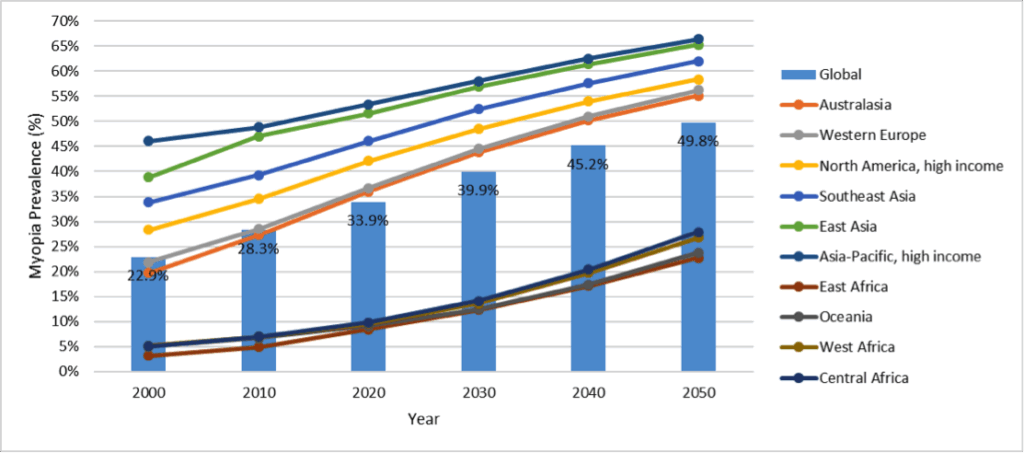
Source: Myopia prevalence by 2050
But that doesn’t mean you have no control over your eye health. While there is no scientifically proven natural cure for myopia, several healthy lifestyle habits can help reduce eye strain, support overall eye health, and slow the progression of myopia, particularly in children and teenagers. Simple practices like spending more time outdoors, following healthy screen habits, maintaining a balanced diet, and having regular eye examinations can all play an important role in protecting your vision.
Research shows eye exercises for myopia, eye relaxation techniques, outdoor activities for eye health, and even eye yoga can help slow this down. And this has to be done along with taking a healthy diet for eyes and steady myopia management to build lifelong habits. Now we are sharing some easy steps for you towards natural remedies for nearsightedness. These won’t replace lenses, but they will for long term support natural vision improvement and prevent myopia progression.
Looking for a complete guide to myopia, including its causes, symptoms, diagnosis, and treatment options? Read our detailed article on What Is Myopia? to understand the condition in depth before exploring natural ways to manage it.
Can Myopia Really Be Cured Naturally?
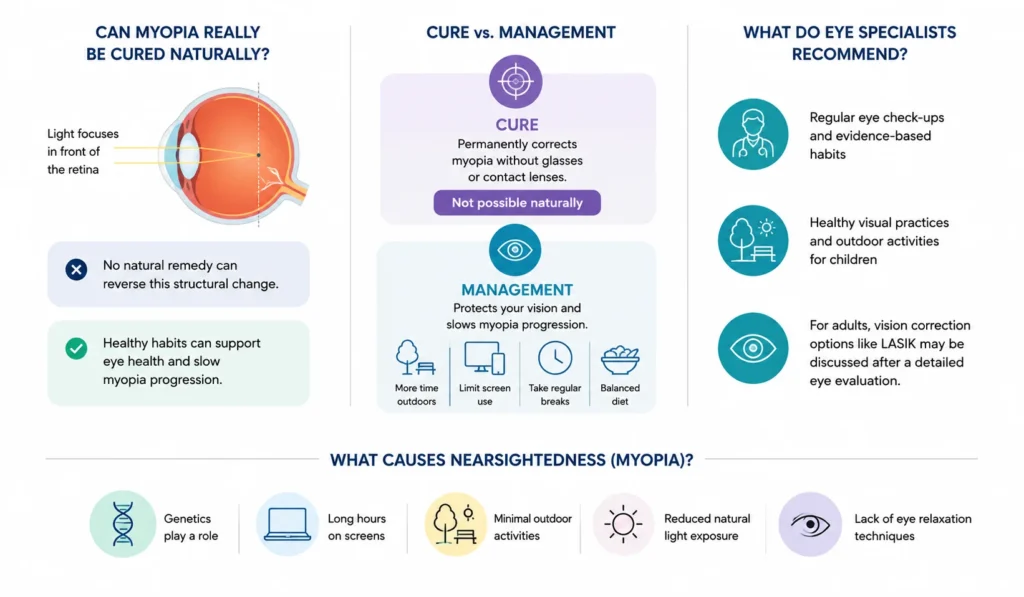
Many people think that they can cure myopia naturally through eye exercises, yoga, home remedies, or special foods. But, there is no scientific evidence that these methods can permanently cure or reverse myopia.
Myopia occurs because the eyeball becomes longer than normal, causing light to focus in front of the retina instead of on it. Since this is a structural change, natural remedies cannot restore the eye to its normal shape.
That doesn’t mean healthy habits are ineffective. While they cannot cure myopia, they can help support overall eye health and may slow the progression of myopia, especially in children and teenagers.
Cure vs. Management
It’s important to understand the difference between curing and managing myopia. A cure would permanently correct the condition without glasses or contact lenses. At present, no natural method has been proven to do this.
Management focuses on protecting your vision and slowing myopia progression. Spending more time outdoors, limiting prolonged screen use, taking regular visual breaks, and maintaining a balanced diet are all healthy habits that support long-term eye health.
What Do Eye Specialists Recommend?
Rather than relying on miracle cures, ophthalmologists recommend evidence-based habits such as regular eye check-ups, healthy visual practices, and outdoor activities for children to help manage myopia.
If you’re an adult with a stable prescription and wish to reduce dependence on glasses, your eye specialist may discuss vision correction procedures like LASIK after a detailed eye evaluation. Some people may also be suitable for other types of specs removal surgery depending on their eye power and corneal thickness.
While myopia cannot currently be cured naturally, combining healthy daily habits with regular eye examinations is the best way to protect your vision and manage its progression.
What Causes Nearsightedness?
Nearsightedness, or myopia, is an eye condition where the eyeball grows slightly longer than normal or when the cornea curves too steeply. This means that you will see distant objects as blurred.
What all causes it?
- Genetics play a role
- Modern habits also contribute, like long hours on screens
- Minimal outdoor activities for eye health
- Reduced natural light exposure can trigger early onset in children.
- Lack of eye relaxation techniques during study or work also worsen the eye strain. Rohan, a 15-year-old student, came to us last year with blurred vision. He had a history of months of online classes in the year 2022. Nihar Netralaya suggested that taking frequent breaks, practising eye yoga, and sunlight exposure will help him prevent myopia progression. This was a must along with a healthy diet for eyes towards sensible myopia management.
“Did you know? The same screen habits that lead to myopia can also trigger Computer Vision Syndrome (CVS).
Natural Ways That May Help Slow Myopia Progression

While natural methods cannot cure myopia, healthy lifestyle habits can support eye health and may help slow the progression of nearsightedness, particularly in children. These evidence-based practices are recommended by eye specialists to reduce eye strain and promote healthy vision.
Spend More Time Outdoors
Spending time outdoors is one of the most effective natural ways to help slow myopia progression in children. Natural daylight may support healthy eye development and reduce the risk of worsening myopia.
Encourage children to spend at least 1.5–2 hours outdoors daily through activities like walking, cycling, or outdoor games.
Follow the 20-20-20 Rule

What we suggest foremost is the 20-20-20 rule. Aaradhya, a young gaming designer, adopted the 20-20-20 rule. This is simple-every 20 minutes, she has to look 20 feet away from her computer screen and that too for 20 seconds. Combined with vision therapy sessions and mindful eye relaxation techniques at Nihar Netralaya, her Myopia discomfort eased.
Maintain a Healthy Reading Distance
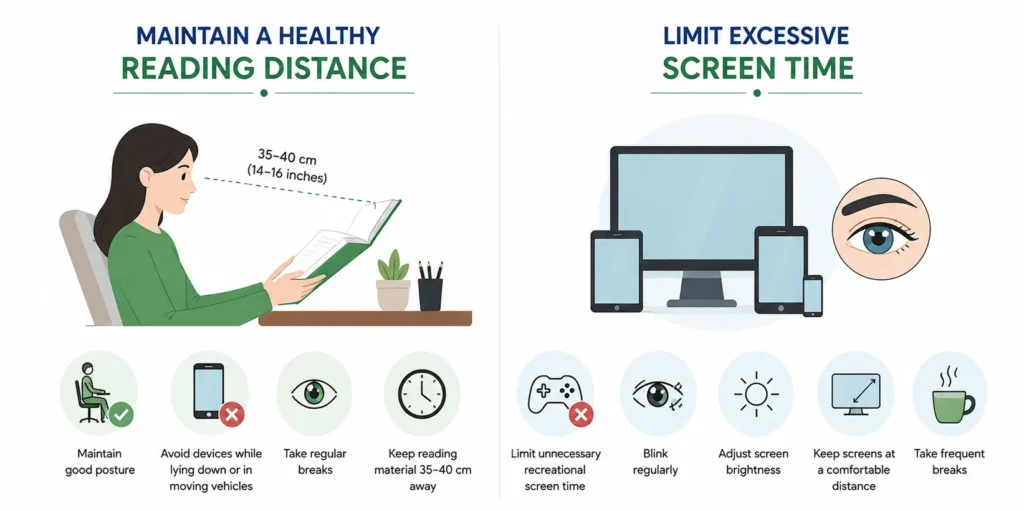
Using books or mobile devices too close to your eyes for long periods can increase eye strain.
To reduce discomfort:
- Keep reading material 35–40 cm (14–16 inches) away.
- Maintain good posture.
- Avoid using devices while lying down or in moving vehicles.
- Take regular breaks during prolonged near work.
Limit Excessive Screen Time
Excessive screen use can reduce blinking and lead to dry, tired eyes. Persistent dryness or irritation may indicate dry eye disease rather than temporary screen fatigue.
Protect your eyes by:
- Limiting unnecessary recreational screen time.
- Blinking regularly.
- Adjusting screen brightness.
- Keeping screens at a comfortable viewing distance.
- Taking frequent breaks during work or study.
If your eyes frequently become itchy, watery, or irritated, it may also be helpful to understand the symptoms of eye allergy and how they differ from eye strain.
Eat a Balanced Diet
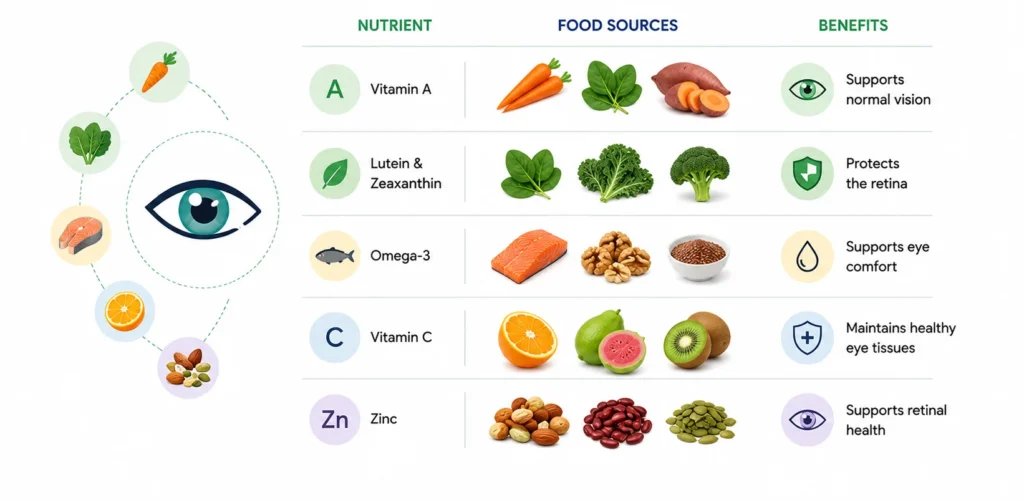
Although no food can cure myopia, a nutritious diet supports overall eye health.
| Nutrient | Food Sources | Benefits |
|---|---|---|
| Vitamin A | Carrots, spinach, sweet potatoes | Supports normal vision |
| Lutein & Zeaxanthin | Spinach, kale, broccoli | Protects the retina |
| Omega-3 | Fish, walnuts, flaxseeds | Supports eye comfort |
| Vitamin C | Oranges, guava, kiwi | Maintains healthy eye tissues |
| Zinc | Nuts, beans, pumpkin seeds | Supports retinal health |
Get Enough Sleep
Adequate sleep allows your eyes to recover from daily visual stress. Adults should aim for 7–8 hours of sleep, while children and teenagers typically need more.
Schedule Regular Eye Check-ups
Routine eye examinations help monitor changes in eye power and detect vision problems early. Regular check-ups are especially important for children with myopia and adults experiencing vision changes.
Eye Exercises for Myopia: Do They Really Work?
There is no scientific evidence that eye exercises can cure myopia or permanently reduce your spectacle number. Since myopia is caused by structural changes in the shape of the eye, exercises cannot change how light focuses on the retina.
However, they can help relieve eye strain, improve visual comfort, and reduce fatigue, especially after prolonged screen use or reading. Think of them as a way to support eye health, not a cure for myopia.
Benefits of Eye Exercises
Although they cannot reverse nearsightedness, regular eye exercises may help:
- Reduce digital eye strain caused by prolonged screen use.
- Relax the eye muscles after extended periods of reading or close work.
- Improve blinking habits and reduce dry eye symptoms.
- Increase visual comfort during daily activities.
Many people notice their eyes feel less tired after practising these exercises, but this temporary comfort should not be mistaken for a permanent improvement in their eye power.
Simple Eye Exercises to Relieve Eye Strain
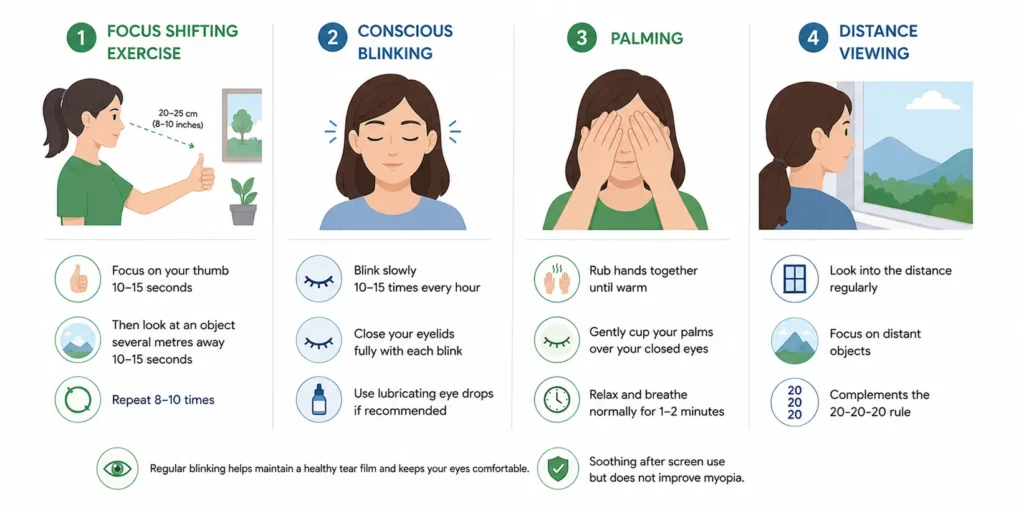
These exercises are safe for most people and can easily be included in your daily routine.
1. Focus Shifting Exercise
This exercise helps relax your focusing muscles after prolonged near work.
- Hold your thumb about 20–25 cm (8–10 inches) from your face.
- Focus on your thumb for 10–15 seconds.
- Then shift your focus to an object several metres away for another 10–15 seconds.
- Repeat this process 8–10 times.
2. Conscious Blinking
When using computers or smartphones, people naturally blink less often, which can lead to dryness and irritation.
- Blink slowly 10–15 times every hour.
- Fully close your eyelids with each blink.
- Use lubricating eye drops if recommended by your ophthalmologist.
Regular blinking helps maintain a healthy tear film and keeps your eyes comfortable.
3. Palming
Palming is a simple relaxation technique that may reduce eye fatigue.
- Rub your hands together until they feel warm.
- Close your eyes.
- Gently cup your palms over your closed eyes without applying pressure.
- Relax and breathe normally for one to two minutes.
While palming can be soothing after extended screen use, it does not improve or reverse myopia.
4. Distance Viewing
If your work involves continuous close-up tasks, make a conscious effort to look into the distance every so often.
Looking out of a window or focusing on distant objects helps relax the eye’s focusing muscles and complements the 20-20-20 rule.
Unique Expert-Backed Approaches Towards Managing Myopia Naturally
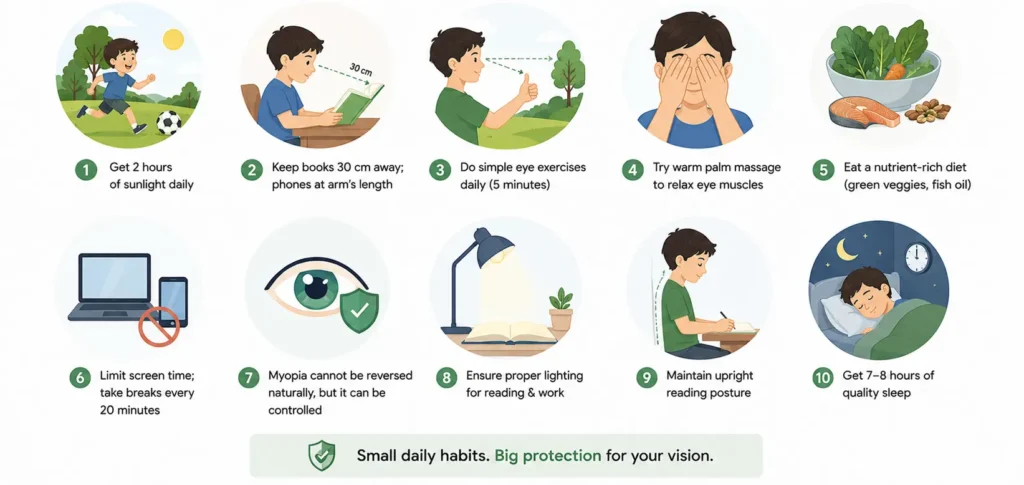
We repeat here that many ask how to cure myopia naturally. As expert eye care specialists in Indore, we always tell them that the eye shape change (Myopia) cannot be undone. Nearsightedness natural cure is not about quick fixes but daily protection. We are snow sharing steps that will stop the eye deterioration process, if you follow these:
- Sunlight is medicine. Children who play outside at least 2 hours daily show slower myopia progression. This is proven in long-term studies from Asia.
- Keep books 30 cm away; keep phones at arm’s length – it reduces eye strain.
- Eye exercises for myopia are simple. One method: focus on your thumb held near, then on a tree far away. Repeat slowly for 5 minutes. It trains the eye muscles.
- Warm palm massage is another safe step. Rub your hands, close your eyes and place palms gently. This relaxes tight eye muscles.
- Natural remedies for nearsightedness include a healthy diet with lots of green vegetables. Carrots, spinach and fish oil support Retina health. Lack of such nutrients makes eyes weaker with age.
- Continuous screen time is poison for young eyes. Every 20 minutes our eyes need a break.
- Can myopia be reversed naturally? No, but it can be controlled. This is the honest truth every patient must know.
- Simple habits-proper lighting, upright reading posture and a good night’s sleep of 7–8 hours work like silent medicine for your eyes.
Cultural & Traditional Eye Care Towards Short Sightedness (India Angle)
In this section, let us take you all back to the roots, the villages of India. We are now sharing facts, not just the vision or story. In small Indian villages, even today, a grandmother would tell her grandson, “Beta, don’t just read your books, look at the green fields too. That’s how to cure myopia naturally.” She believes nature itself has answers.
The village children often practice eye exercises for myopia during fun activities. You can find them shifting his gaze from the distant banyan tree to the oil lamp flame in the courtyard. Mothers in both modern and village households even today prepare soaked almonds and leafy sabzi. Our grannies have been calling them natural remedies for nearsightedness.
Elders often remind everyone, “Sit straight, use proper light, don’t strain.” Though doctors today explain there is no complete natural cure for nearsightedness, these cultural habits still help reduce stress on the eyes. Families have passed these traditional eye relaxation techniques and outdoor activities for eye health – from generation to generation, thereby blending tradition with natural wisdom.
When to See an Eye Doctor if You Have a Doubt of Myopia
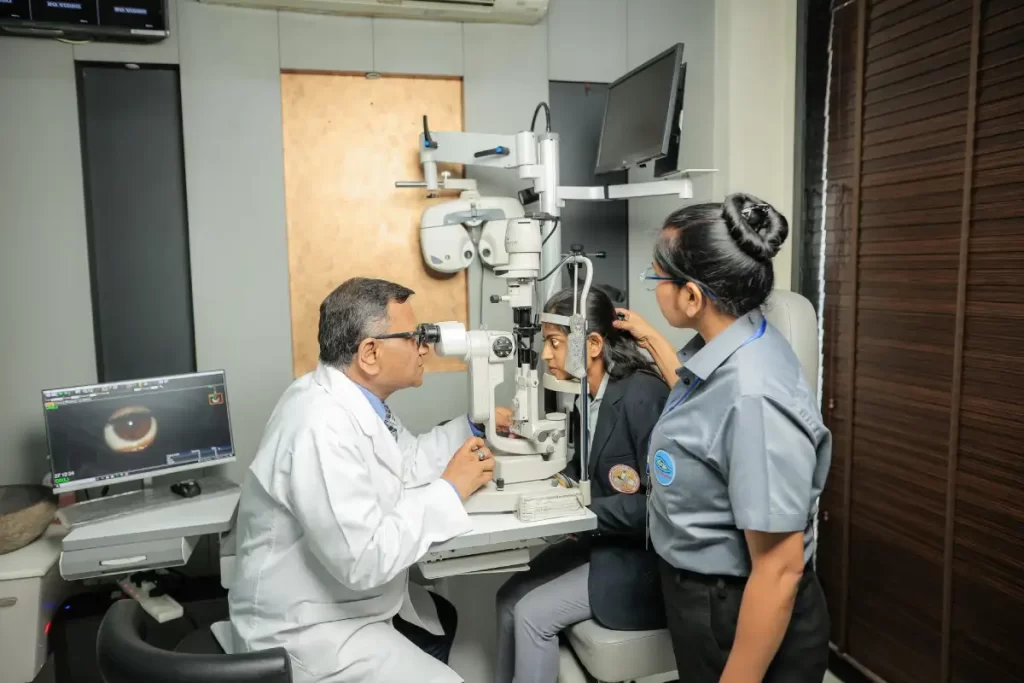
See a doctor if:
- You or your child squints often
- If you or the child holds books too close
- If the person complains of persistent headaches
- Sudden changes in vision
- Double vision or flashes of light
Remember that untreated near-sightedness natural cure attempts may miss hidden risks like retinal problems. Nihar Netralaya always advises regular eye check-ups, especially for children, to prevent myopia progression.
Conclusion
Healthy habits such as spending more time outdoors, managing screen time, and having regular eye check-ups can support eye health and may help slow myopia progression, especially in children.
If you or your child experience blurred distance vision or frequent changes in spectacle power, don’t ignore the symptoms. A comprehensive eye examination can identify the cause early and ensure you receive the right advice and treatment to protect your vision.
FAQs
Myopia typically slows down or stabilizes in the late teenage years or early twenties, usually between the ages of 18 and 24. However, some people may continue to experience gradual changes into adulthood, especially if they spend long hours on close-up work or have high myopia. Regular eye examinations help monitor any progression.
Yes. Genetics play an important role in the development of myopia. Children with one or both parents who are nearsighted have a higher risk of developing myopia. Environmental factors such as prolonged screen time and limited outdoor activity can further increase this risk.
High myopia can increase the risk of serious eye conditions such as retinal detachment, glaucoma, cataracts, and myopic macular degeneration. Early diagnosis and regular monitoring by an eye specialist are important to protect long-term vision.
Adults with stable myopia may be eligible for vision correction procedures such as LASIK, SMILE, PRK, or Implantable Collamer Lens (ICL) surgery. Suitability depends on factors such as age, prescription stability, corneal thickness, and overall eye health.
High myopia is generally defined as a prescription of -6.00 diopters or higher. People with high myopia have an increased risk of retinal detachment, glaucoma, cataracts, and myopic macular degeneration, making regular eye examinations especially important.
Children with myopia should usually have an eye examination every 6 to 12 months, while adults should have regular check-ups as recommended by their ophthalmologist. More frequent visits may be needed if vision changes rapidly.
