

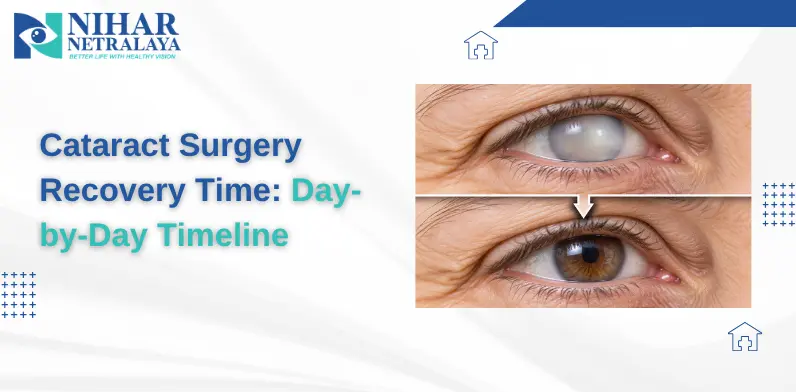
Cataract surgery replaces your cloudy lens with an artificial intraocular lens (IOL) to help you see clearly. But after surgery, your eyes may need time to heal.
If you or your family member has undergone cataract surgery, it is natural to wonder:
How soon will your vision improve?
When can you return to work?
What precautions have you taken after surgery?
In this guide, we will give you answers to all your concerns and cataract surgery recovery time day by day.
Cataract Surgery Recovery Time: How Long Does It Take to Recover From Cataract Surgery?
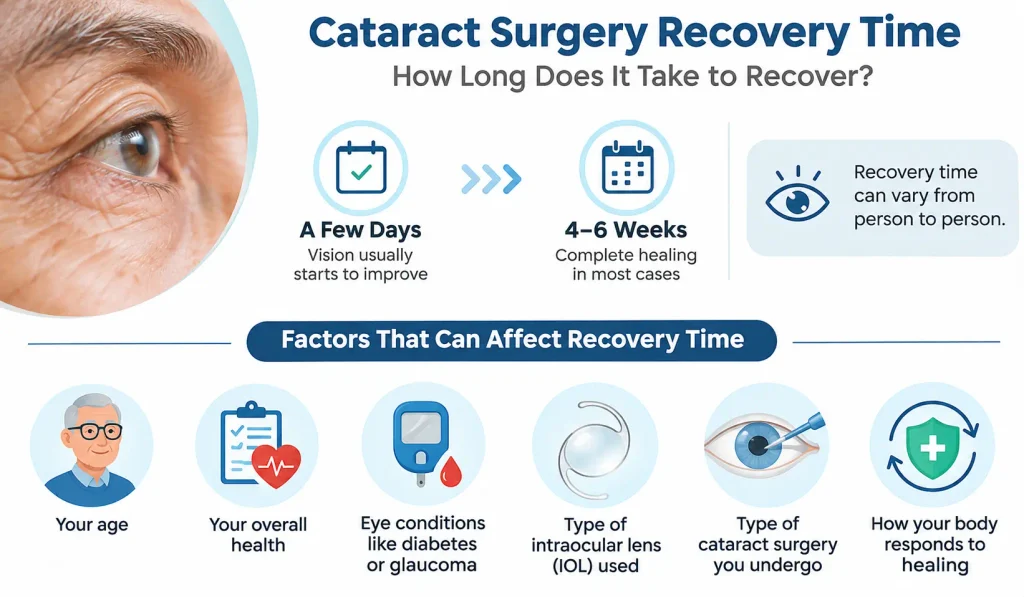
After cataract surgery, your vision may improve within a few days. But complete healing takes time.
In normal cases, many patients recover in 4-6 weeks, but the cataract surgery recovery period can vary from person to person.
According to the American Academy of Ophthalmology’s cataract surgery recovery guidelines, most patients notice improved vision within a few days, although complete healing may take several weeks.
Here are some factors that can affect your recovery time:
- Your age
- Your overall health
- Your eye condition, such as diabetes or glaucoma
- Which type of intraocular lens is used
- Types of cataract surgery you undergo
- How your body responds to healing
Cataract Surgery Recovery Timeline: Day by Day
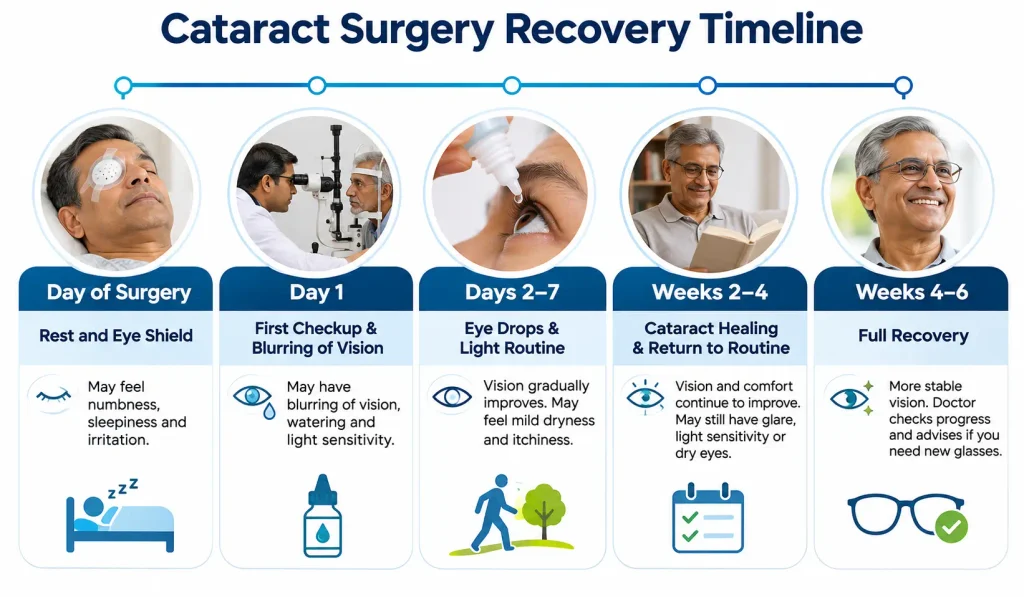
The following describes the recovery process starting from the day of your surgery until complete recovery after the cataract surgery:
Day of Surgery: Rest and Eye Shield after Cataract Surgery
When you go home after surgery, you may feel numbness, sleepiness and irritation in your eyes. Rest at home and wear the eye shield in the operated eye, as directed by your doctor.
Day 1: First Checkup and Blurring of Vision after Cataract Surgery
The eye doctor examines your operated eye to assess the status of healing and other complications. One day after the surgery, there may be blurring of vision, watering, and sensitivity to light in your eyes. Use eye drops prescribed by your doctor.
Days 2–7: Eye Drops and Light Routine
Between days 2 and 7, your vision gradually improves. But you may feel mild dryness and itchiness. Continue eye drops. You can continue light daily activities if you are comfortable.
Weeks 2–4: Cataract Healing Time and Return to Routine
During this time, your vision and comfort continue to improve. You can gradually return to your normal activities if your eye surgeon approves it. But some patients may still experience glare, light sensitivity, or dry eyes.
Weeks 4–6: Full Recovery Post Cataract Surgery
Many patients have more stable vision in this stage. The doctor can check your progress and tell you when you need a new glasses prescription.
In some patients, vision becomes hazy again months or years later because the capsule behind the lens turns cloudy, which is usually corrected with a quick YAG laser treatment.
Precautions After Cataract Surgery: Dos and Don’ts
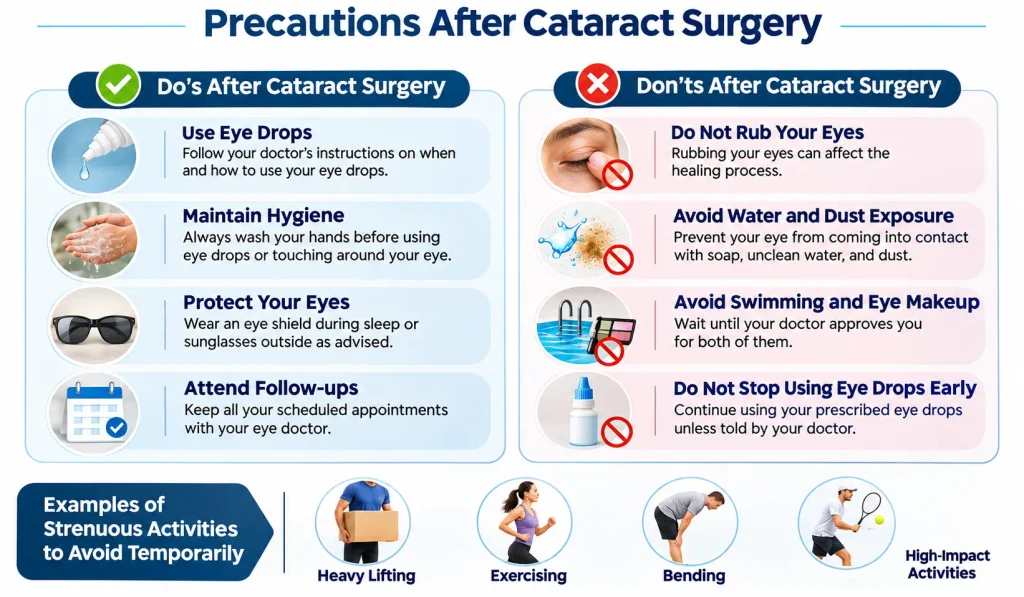
To protect your eyes after cataract surgery, here we explain some precautions you can take:
Do’s After Cataract Surgery
- Eye drops: Follow the directions of your ophthalmologist on when and how to use your eye drops.
- Hygiene: Always wash your hands before putting in the eye drops or before touching the area around your eye.
- Eye protection: Always wear an eye shield during sleep or wear sunglasses outside as recommended by your ophthalmologist.
- Follow-up: Attend all the appointments as per schedule.
Don’ts After Cataract Surgery
- Stop rubbing your eyes: Rubbing your eyes can affect the healing process.
- Avoid exposing your eye to water and dust: Prevent your eye from coming into contact with soap, unclean water, and dust.
- Avoid swimming and makeup on eyes: Wait until your doctor approves you for both of them.
- Stop using your eye drops: Take eye drops unless told by your doctor.
For additional guidance on postoperative precautions, the NHS cataract surgery recovery recommendations explain which activities patients should avoid while their eyes are healing.
What Is Considered Strenuous Activity After Cataract Surgery?
Heavy lifting, exercising, bending, and high-impact physical activities may have to be avoided temporarily. These activities may place strain on your body and may increase the risk of injury to your eye during the process of its healing.
Daily Activities: When Can You Get Back to Normal?
You can slowly resume your activities after undergoing cataract surgery as you recover. But some activities may require extra care.
When to Take a Head Bath After Cataract Surgery
You may be able to wash your hair a few days after the surgery, depending on the advice of your eye surgeon. You should keep the operated eye closed and avoid any water and shampoo going into your eye.
Mobile Use and TV After Cataract Surgery
Using your mobile phone and watching television may be allowed, but you should give your eyes some breaks if they feel tired or dry. If screens leave your eyes tired, you can follow these tips on computer vision syndrome and eye strain to reduce the discomfort.
When Can I Drive After Cataract Surgery?
You should not drive immediately after surgery. You may only do so once your vision is adequate and your eye surgeon confirms it is safe.
Work and Travel: How Many Days Rest After Cataract Surgery?
If you work at a desk, then you can start working again a few days after cataract surgery. In other cases, such as outdoor or physically demanding jobs, it may depend on how you are recovering.
How to Sleep After Cataract Surgery
You can sleep in either a lying or side position, but make sure that you do not put any pressure on your operated eye. Place your head a little higher using a pillow to minimise swelling. Always use your eye shield during nighttime for the first week.
Cataract Surgery Aftercare: Eye Drops and Diet
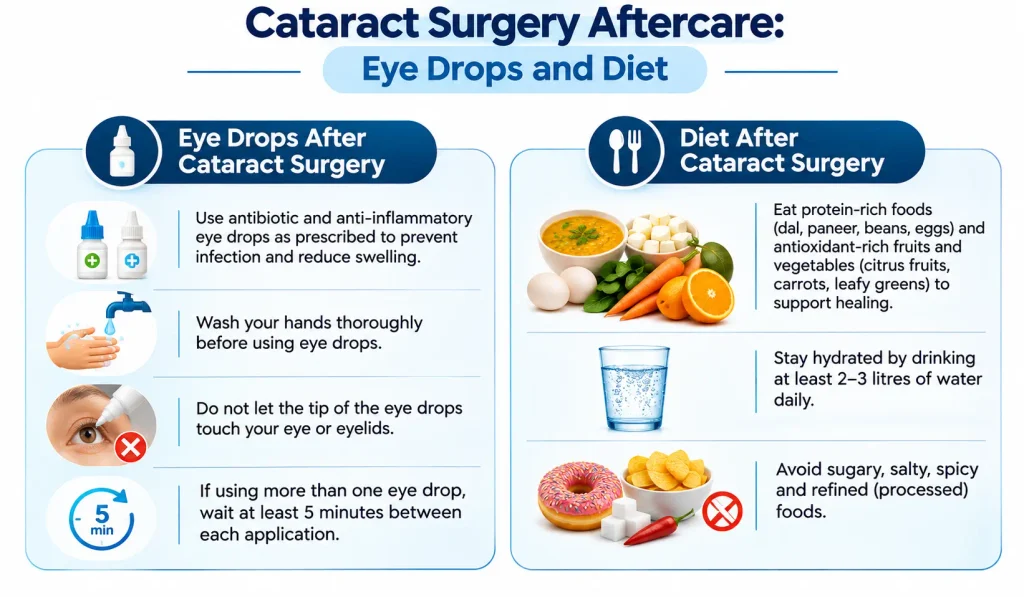
Here we explain the post-operative care for eye drops and diet you should follow to ensure that your eyes heal properly and minimise complications.
Eye Drops After Cataract Surgery
- According to your doctor’s advice, take antibiotic and anti-inflammatory eye drops to prevent any infection and reduce swelling.
- Before taking eye drops in your eyes, clean your hands thoroughly.
- Don’t let the tip of the eye drops touch your eye or eyelids.
- If you are using more than one eye drop, there should be a gap of at least 5 minutes between each application.
Diet After Cataract Surgery
- Eat foods that can help in the healing process of your eyes, such as protein foods including dal, paneer, beans, eggs, and fruits and vegetables rich in antioxidants such as citrus, carrots, and leafy vegetables.
- To keep your eyes hydrated, take at least 2-3 litres of water daily.
- Avoid sugary foods, salty foods, spicy foods, and refined foods.
Normal Symptoms vs Warning Signs After Cataract Surgery
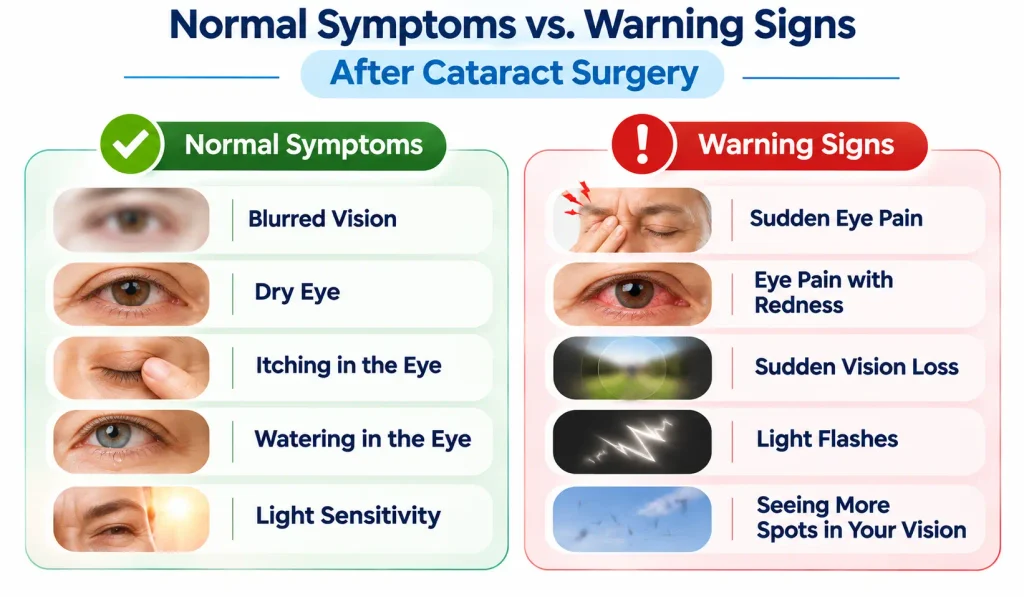
Normal symptoms and warning signs are as follows:
Normal Symptoms:
- Blurred vision
- Dry eye
- Itching in the eye
- Watering in the eye
- Light sensitivity
Warning Signs:
- Sudden eye pain
- Eye pain with redness
- Sudden vision loss
- Light flashes
- Seeing more spots in your vision
Sudden light flashes or new floaters can sometimes point to a problem in the retina, which may need retina surgery depending on the cause.
Final Thoughts: Take the Right Steps for a Smooth Cataract Recovery

Cataract surgery is one of the essential steps in achieving better vision. However, proper postoperative care is equally important and requires careful adherence to your surgeon’s instructions.
If you are still planning the procedure, you can also read about the early signs of cataracts and cataract eye surgery cost.
If you need any assistance in your recovery process, Dr Nihar Garg from Nihar Netralaya, an eye hospital in Indore, can support you throughout your treatment and recovery journey.
FAQs
You don’t need complete bed rest. Most people take it easy for the first 2-3 days and then return to light activities. Desk work can often resume within a few days, while heavy lifting and exercise need to wait until your surgeon approves.
Yes, but gently. Keep your eyes closed and use a clean, damp cloth to wipe around the eye instead of splashing water. Wash your hair only when your surgeon allows it, and keep soap and shampoo away from the operated eye.
Avoid rubbing or pressing the eye, heavy lifting, bending at the waist, strenuous exercise, swimming, eye makeup, and getting water or dust in the eye. Don’t skip your eye drops, and don’t drive until your surgeon confirms it is safe.
Light cooking is usually fine after a day or two. Stay away from hot oil splashes, steam, and smoke close to your face, and wash your hands before touching the area around your eye.
No, you don’t have to stay indoors. You can step outside, but wear sunglasses to protect your eye from bright light, wind, and dust, and avoid crowded or dusty places in the first week.
Many ophthalmologists recommend wearing a protective eye shield while sleeping during the first week after surgery. It helps prevent accidental rubbing or pressure on the operated eye. The exact duration may vary depending on your surgeon’s instructions.