
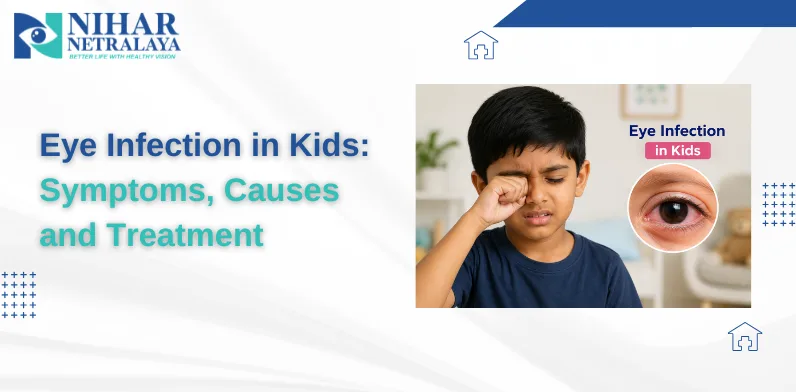
“It is just dust in the eye”. Many parents thought this when they noticed red and watery eyes in their child. And sometimes, they are right. But when redness does not improve or is followed by swelling, sticky discharge, itching, or pain, it may be an eye infection rather than irritation.
But why does this happen? Is it safe to wait and watch? Or does your child need medical attention?
In this guide, we discuss the causes and symptoms of eye infection in kids, as well as how to avoid complications and protect your child’s vision.
What Is an Eye Infection in Children?
An eye infection in children happens because there are certain microbes that infect various structures of your child’s eyes.
These include:
- Conjunctiva
- Eyelids
- Cornea
- Tear ducts
The most common form of eye disease in children is the eye infection. Many childhood eye conditions, including infections, are evaluated as part of pediatric ophthalmology. This is most seen in infants, preschool- and school-aged children, as they often touch their eyes with unclean hands and come into contact with other children, increasing the risk of infection.
Let’s look at the common signs that may suggest your child has an eye infection.
Symptoms of Eye Infection in Kids
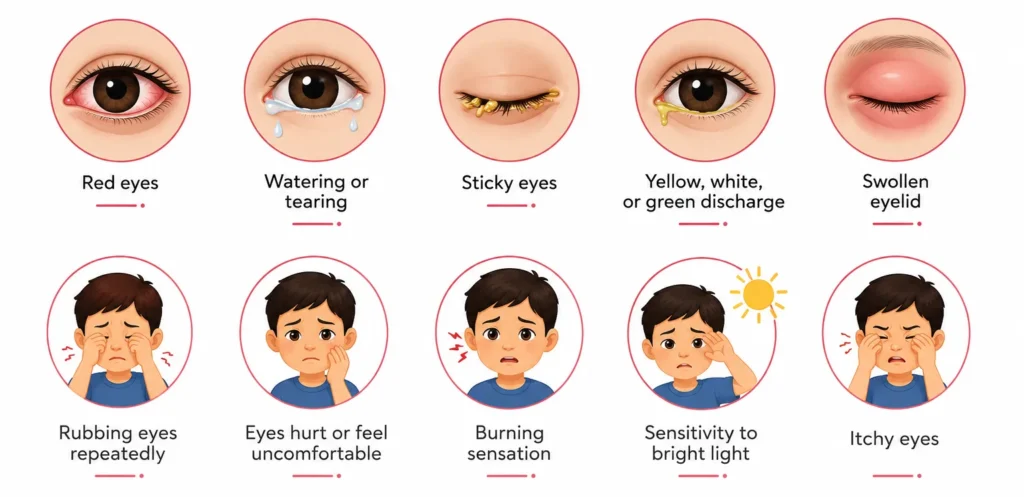
Here are some signs of eye infection in children:
- One or both of your child’s eyes may look red
- Your child’s eyes may keep watering or tearing
- The eyes may feel sticky
- You may notice yellow, white, or green discharge
- You may notice a swollen eyelid in your child
- Your child may rub the eyes again and again
- Your child may say the eyes hurt or feel uncomfortable
- Your child may feel a burning sensation in the eyes
- Bright light may bother your child more than usual
- Itchy eyes in your child, especially if caused by allergies or irritation
If itching is the main symptom, it may also help to understand how eye allergy treatment differs from treating an infection.
Common Causes and Types of Eye Infections in Children
Here are some of the most prevalent causes and types of eye disorders that may affect your child:
1. Conjunctivitis (Pink Eye) in Children
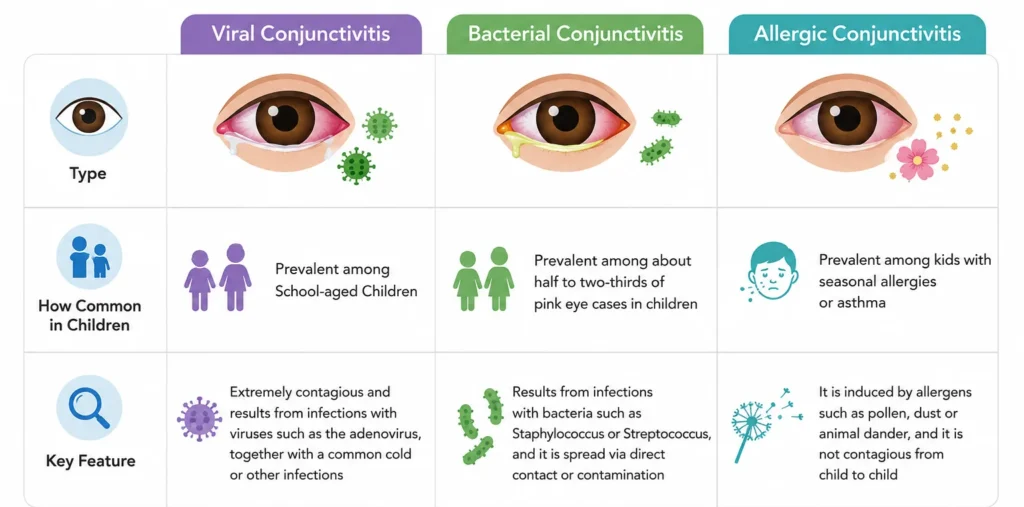
Pink eye in kids, also called conjunctivitis, refers to the inflammation of the transparent membrane that covers the white part of your child’s eye as well as the inner surfaces of eyelids. This is the most common eye disorder in children, and it can be noticed in either one or both eyes.
The table below shows the differences between the three types of conjunctivitis:
| Type | How Common in Children | Key Feature |
| Viral conjunctivitis | Prevalent among School-aged Children | Extremely contagious and results from infections with viruses such as the adenovirus, together with a common cold or other infections |
| Bacterial conjunctivitis | Prevalent among about half to two-thirds of pink eye cases in children | Results from infections with bacteria such as Staphylococcus or Streptococcus, and it is spread via direct contact or contamination |
| Allergic conjunctivitis | Prevalent among kids with seasonal allergies or asthma | It is induced by allergens such as pollen, dust or animal dander, and it is not contagious from child to child |
2. Conjunctivitis in Newborns
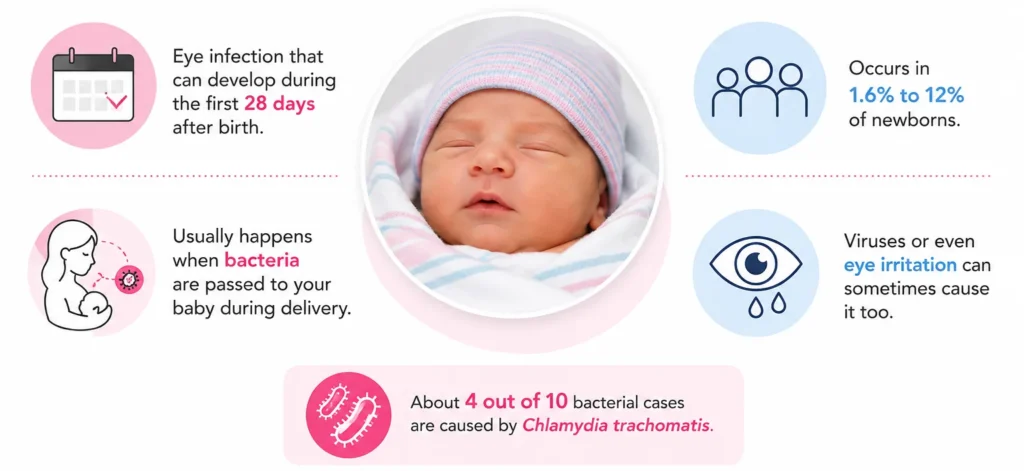
Conjunctivitis in newborns, also called ophthalmia neonatorum, is an eye infection that can develop during the first 28 days after birth.
According to the American Academy of Pediatrics (AAP), it occurs in 1.6% to 12% of newborns. It usually happens when bacteria are passed to your baby during delivery, though viruses or even eye irritation can sometimes cause it too.
According to a 2022 review published in The BMJ, about 4 out of 10 bacterial cases are caused by a bacterium called Chlamydia trachomatis.
3. Stye and Chalazion in Children
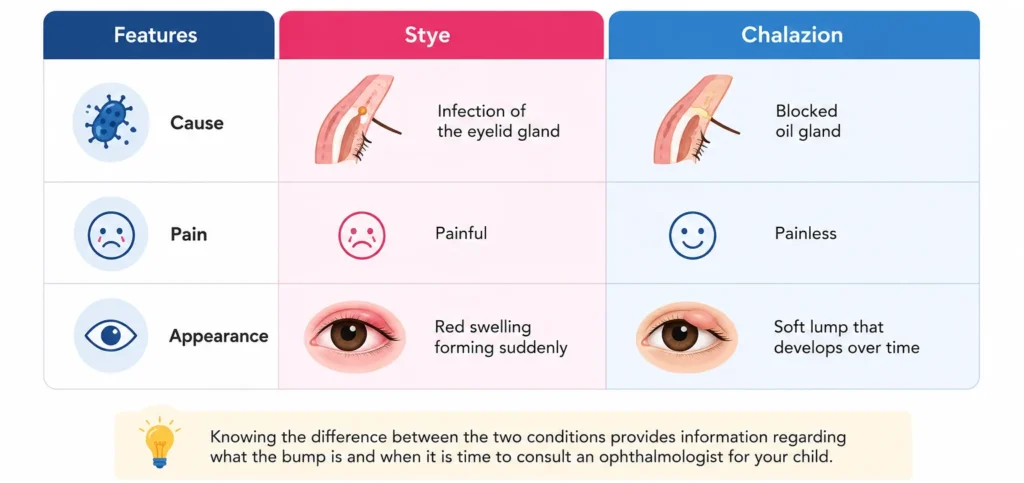
If your child develops a lump on the eyelid, it may be a stye or a chalazion. Both affect your child’s eyelid, but they are two different conditions and need different treatments.
The table below presents a comparison between a stye and a chalazion:
| Features | Stye | Chalazion |
| Cause | Infection of the eyelid gland | Blocked oil gland |
| Pain | Painful | Painless |
| Appearance | Red swelling forming suddenly | Soft lump that develops over time |
Knowing the difference between the two conditions provides information regarding what the bump is and when it is time to consult an ophthalmologist for your child.
4. Blocked Tear Duct in Babies
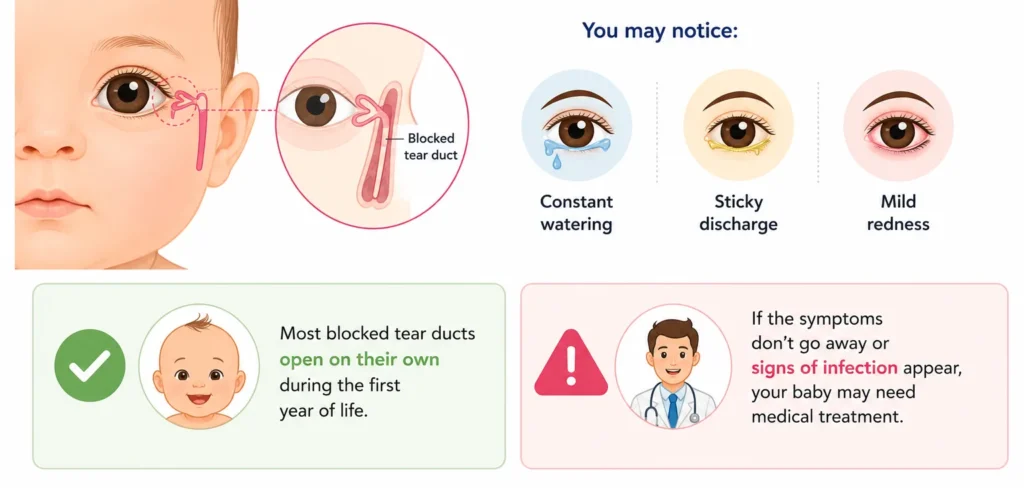
The nasolacrimal (tear) duct carries tears from your baby’s eyes into the nose. Sometimes, this duct doesn’t open fully at birth, so tears collect in the eye. You may notice constant watering, sticky discharge, or mild redness.
Most blocked tear ducts open on their own during the first year of life. Persistent blockage beyond infancy may sometimes require evaluation for dacryocystorhinostomy (DCR) in selected cases. But if the symptoms don’t go away or signs of infection appear, your baby may need medical treatment.
Treatment for Eye Infection in Kids
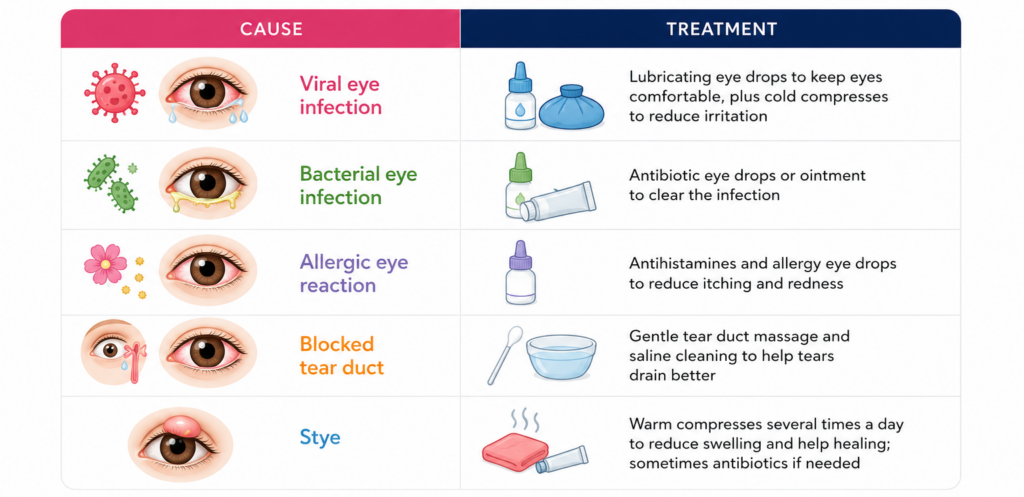
The best treatment depends on what is causing your child’s eye infection. Treatment approaches can also vary depending on the type and severity of the infection, as explained in our guide on how to cure eye infection in 24 hours. Some get better with home care, while others need medicines from the doctor. That’s why you should never use eye drops without medical advice.
After checking your child’s eyes, we suggest the following treatment:
| Cause | Treatment |
| Viral eye infection | Lubricating eye drops to keep eyes comfortable, plus cold compresses to reduce irritation |
| Bacterial eye infection | Antibiotic eye drops or ointment to clear the infection |
| Allergic eye reaction | Antihistamines and allergy eye drops to reduce itching and redness |
| Blocked tear duct | Gentle tear duct massage and saline cleaning to help tears drain better |
| Stye | Warm compresses several times a day to reduce swelling and help healing; sometimes antibiotics if needed |
Prevention and When to See a Doctor
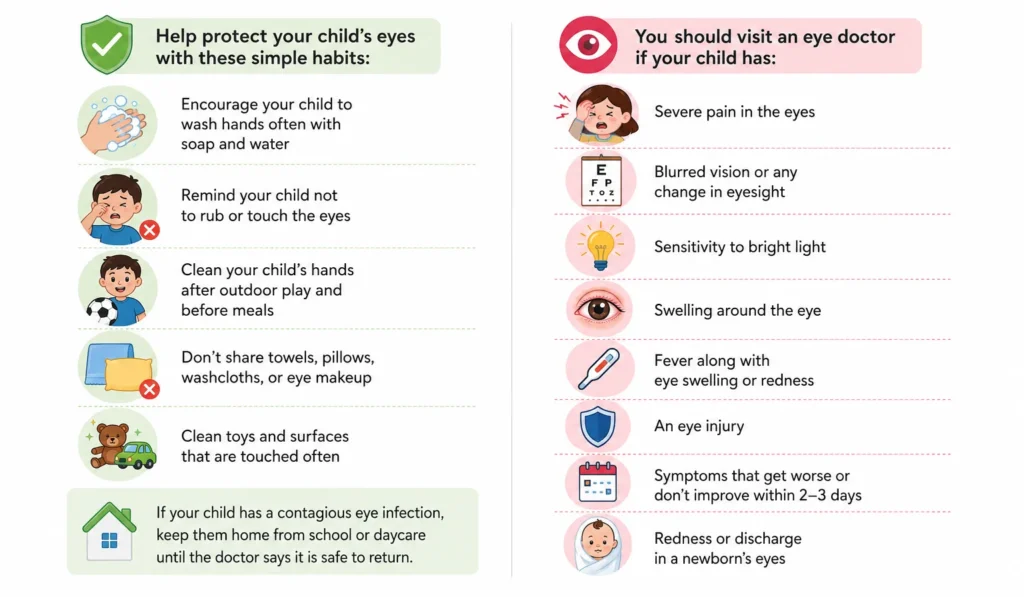
Help protect your child’s eyes with these simple habits:
- Encourage your child to wash hands often with soap and water
- Remind your child not to rub or touch the eyes
- Clean your child’s hands after outdoor play and before meals
- Don’t share towels, pillows, washcloths, or eye makeup
- Clean toys and surfaces that are touched often
These hygiene habits also complement other everyday practices that help protect children’s eyesight, as discussed in 7 practical tips to protect eyes from everyday harm.
If your child has a contagious eye infection, keep them home from school or daycare until the doctor says it is safe to return.
You should visit an eye doctor if your child has:
- Severe pain in the eyes
- Blurred vision or any change in eyesight
- Sensitivity to bright light
- Swelling around the eye
- Fever along with eye swelling or redness
- An eye injury
- Symptoms that get worse or don’t improve within 2-3 days
- Redness or discharge in a newborn’s eyes
Swelling affecting the eyelids or surrounding tissues may sometimes require assessment by an oculoplastic surgery specialist.
Final Thoughts: Expert Eye Infection Treatment for Kids at Nihar Netralaya, Indore

If your child has redness, eye discharge, or swelling, our team at Nihar Netralaya, Indore is here to help. Our experienced pediatric eye specialists carefully examine your child’s eyes, identify the cause of the infection, and recommend the right eye treatment. With advanced diagnostic facilities and a child-friendly approach, we make every visit as comfortable and reassuring as possible for both you and your child.
FAQs
The duration depends on the cause of the infection. Viral eye infections usually improve within 7 to 14 days, although some cases may take up to three weeks. Bacterial eye infections often improve within a few days after starting antibiotic treatment. Allergic eye symptoms continue until the allergy trigger is controlled. If your child’s symptoms are getting worse or do not improve within 2–3 days, consult an eye specialist.
Yes, viral and bacterial conjunctivitis are highly contagious and can spread easily through direct contact, shared towels, toys, or contaminated hands. Allergic conjunctivitis, however, is not contagious because it is caused by allergens rather than germs.
Some eye drops are safe for children, but the right medicine depends on the cause of the problem. Artificial tears may help relieve irritation, while antibiotic or allergy eye drops should only be used if prescribed by a doctor. Never use leftover eye drops or someone else’s prescription for your child.
Home remedies such as warm or cold compresses can help relieve discomfort, but they cannot cure every eye infection. Viral infections usually improve with supportive care, while bacterial infections may require prescription antibiotics. Never put lemon juice, honey, breast milk, or other homemade substances directly into your child’s eyes, as they may cause further irritation or damage.
Yes. Pillowcases, towels, washcloths, and other personal items can collect bacteria and viruses. Sharing them or not washing them regularly may increase the risk of spreading contagious eye infections. Using clean towels and changing pillowcases frequently can help reduce the risk.
Yes. Viral and bacterial eye infections often begin in one eye and spread to the other if proper hygiene is not maintained. Washing hands frequently and using separate clean towels for each eye can help reduce the spread.
