
I often see that many patients run to the hospital when they have any skin or breathing allergies. But they ignore eye allergies until they become severe.
Have you ever noticed an itchy or watery eye and thought it was due to a lack of sleep or screen time? Here, many patients get confused. They started any random eye drops and home remedies without understanding the real cause.
But when eyes become more itchy, redness increases, and burning, their confusion quickly turns into concern. So, how can you tell whether it is simple irritation or an actual eye allergy?
This guide provides information on the causes of eye allergies, their symptoms, and possible treatments to help keep your eyes healthy.
What is Eye Allergy (Allergic Conjunctivitis)?
When your eyes react to allergens such as dust, pollen, or smoke, you have eye allergies. This condition is also referred to as allergic conjunctivitis.
This condition affects the thin, transparent tissue layer covering the white areas of your eyes and the inner surfaces of your eyelids, called the conjunctiva.
Studies suggest that eye allergies affect nearly 6% to 30% of the global population. In India, studies report that around 12.22% of people experience allergic conjunctivitis.
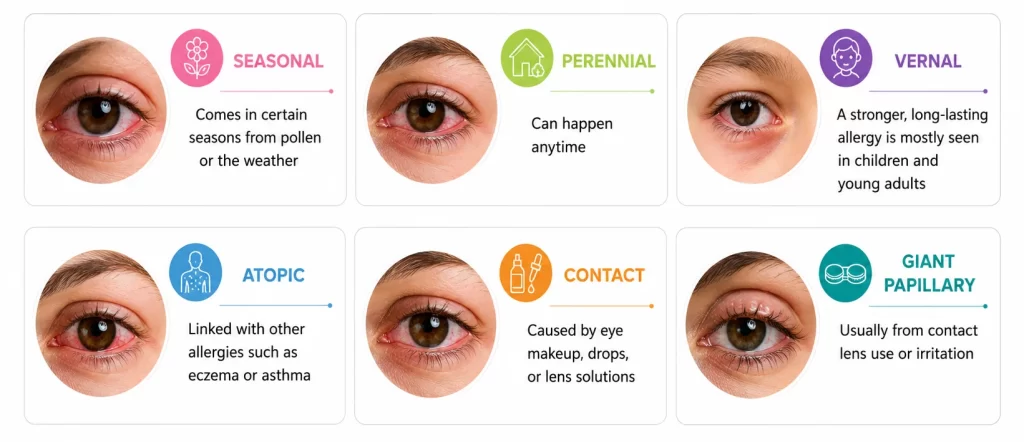
According to the ACAAI, some of the most frequent eye allergies include:
| Types of Allergy Conjunctivitis | Overview |
| Seasonal | Comes in certain seasons from pollen or the weather |
| Perennial | Can happen anytime |
| Vernal | A stronger, long‑lasting allergy is mostly seen in children and young adults |
| Atopic | Linked with other allergies such as eczema or asthma |
| Contact | Caused by eye makeup, drops, or lens solutions |
| Giant papillary | Usually from contact lens use or irritation |
It is important to understand that eye allergies cannot be transmitted from one person to another.
Eye Allergy Causes: Common Triggers to Know
An allergic reaction in your eyes can occur from exposure to some environmental allergens. But how does this allergen affect your eyes? Let’s understand with simple words.
In simpler terms, imagine your immune system as a security guard in your body. Normally, it ignores harmless allergens. However, with eye allergy, your “security guard” treats them as dangerous foreign particles.
Once these allergens settle on your eyes, your body creates a false alarm. As a result, your eyes produce histamine, which causes them to swell and water to flush out these allergens.
A recent article in The Times of India reports that doctors are observing a rise in cases of allergic conjunctivitis due to increasing pollution and changing weather conditions.
Some of the most common causes for eye allergies are:
| Outdoor Allergens | Pollen from trees, grass, or flowers often irritates. Dust, pet hair, smoke, damp mold, and city smog can also make your eyes itchy, red, or watery. |
| Indoor allergens | Makeup, perfumes, sprays, or contact lenses can trigger allergies. Dust in your home can also irritate you. |
Eye Allergy Symptoms: What to Look Out For
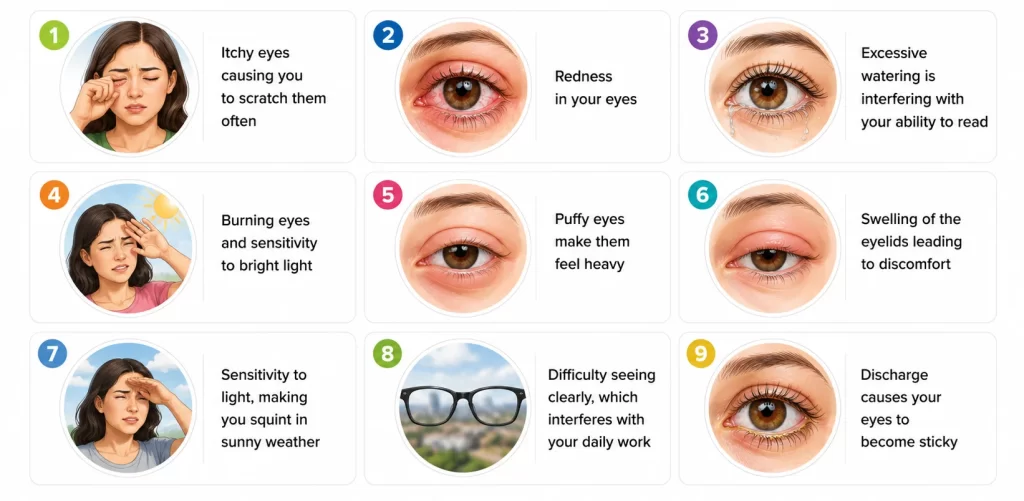
There are many possible symptoms of eye allergies, depending on the person. Some people experience mild symptoms, while others have severe symptoms.
Below are eye allergy symptoms that you can experience, according to the American Academy of Ophthalmology:
- Itchy eyes causing you to scratch them often
- Redness in your eyes
- Excessive watering is interfering with your ability to read
- Burning eyes and sensitivity to bright light
- Puffy eyes make them feel heavy
- Swelling of the eyelids leading to discomfort
- Sensitivity to light, making you squint in sunny weather
- Difficulty seeing clearly, which interferes with your daily work
- Discharge causes your eyes to become sticky
Sometimes, symptoms like burning and irritation can also overlap with dry and irritated eyes, which may have a completely different cause and need separate attention.
But the common confusion patients have is whether these symptoms are caused by an allergy or an eye infection. Let’s understand the difference between eye allergy and infection.
Eye Allergy or Pink Eye? How to Tell the Difference
Eye allergy and pink eye may look the same, but the causes are different.
| Condition | What it means | Key signs | Spread to others? |
| Eye Allergy | The allergic reaction of the eyes to dust, pollen, smoke, or another irritant | Tearing, itching, redness | No, not contagious |
| Pink Eye | An eye infection that can be viral or bacterial | Excessive mucus formation, crusting, pain, fever, and redness | Yes, contagious |
Eye Allergy Treatment at Nihar Netralaya, Indore
As eye specialists, we strongly believe that any successful eye allergy treatment must begin with diagnosing the underlying cause of your eye irritation.
At Nihar Netralaya, we provide customised best eye allergy treatment in Indore depending on how severe your allergic reactions are, the type of allergens that affect you, and your overall state of eye health.
- If you are experiencing mild eye symptoms, we usually recommend allergy eye drops, cold compresses, and antihistamine eye drops.
- If your eye allergy comes back frequently or with the season, we prescribe mast cell stabilizers.
- In serious cases such as VKC, we may use steroid eye drops, eye ointments, oral antihistamines, allergy medicine, or eye allergy tablets under close supervision.
In addition, we provide our patients with expert advice on eye hygiene, safe makeup application, and contact lens care.
Home Remedies and Tips to Prevent Eye Allergy
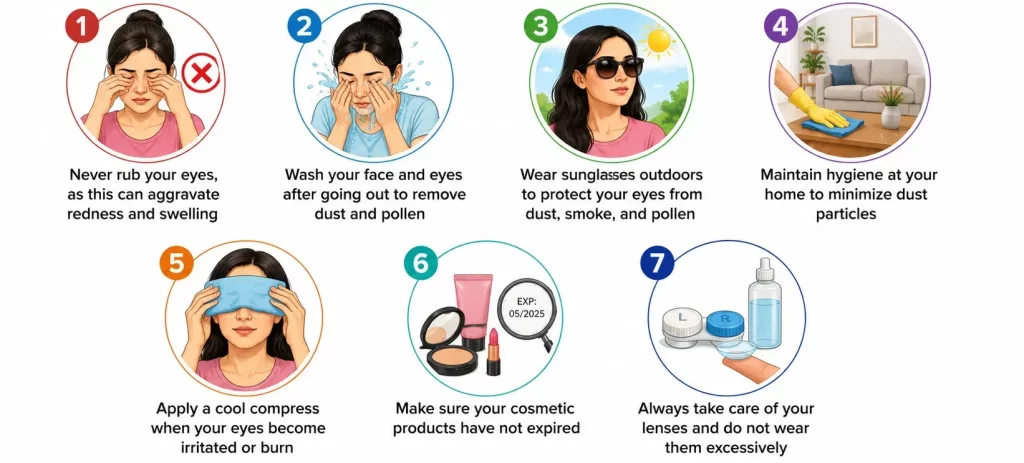
In addition to medication, your lifestyle also helps reduce the risk of eye problems. Some simple tips that may be useful include:
- Never rub your eyes, as this can aggravate redness and swelling
- Wash your face and eyes after going out to remove dust and pollen
- Wear sunglasses outdoors to protect your eyes from dust, smoke, and pollen
- Maintain hygiene at your home to minimize dust particles
- Apply a cool compress when your eyes become irritated or burn
- Make sure your cosmetic products have not expired
- Always take care of your lenses and do not wear them excessively
Wearing lenses for extended hours can also trigger or worsen dry eye, a condition that often shares symptoms with allergic reactions but requires different management.
Can Eye Allergy Cause Permanent Damage?
The question that most patients have is, “Could eye allergy cause vision loss?”
The typical answer to this question is no; there are safe ways to manage eye allergies through proper diagnosis and treatment. The main problems come when there is delayed treatment and improper usage of steroid eye drops.
Severe eye allergies, such as VKC, may lead to vision loss due to chronic corneal inflammation. Eye rubbing also contributes to further irritation.
Final Thoughts: Personalized Eye Allergy Care You Can Trust

Eye allergies must not be taken lightly, especially if they keep coming back or start disturbing your daily life. When identified early, they can be treated safely without long‑term problems.
The eye allergy specialist at Nihar Netralaya Indore provides safe and customized treatment options for any type of eye allergy that you may have. With proper diagnosis and timely management, we can protect your eyes and prevent any further damage.
FAQs
Yes, eye allergies often become worse during spring, summer, or monsoon seasons because pollen, dust, humidity, and air pollution levels increase during these times.
Your eyes may itch more at night because allergens like dust mites, pet hair, and indoor dust accumulate on pillows, bedsheets, curtains, and mattresses.
Yes, excessive screen time reduces blinking and increases eye dryness, which can make itching, redness, and irritation from allergies feel more severe.
It is better to avoid contact lenses during active eye allergy symptoms because lenses can trap allergens and increase irritation, redness, and watering.
Rubbing your eyes releases more histamine, which can worsen itching, swelling, and redness. Continuous rubbing may also damage the cornea over time.
Yes, many people with eye allergies also experience asthma, allergic rhinitis, sneezing, sinus congestion, or eczema because all are related to allergic reactions in the body.
Yes, expired or poor-quality eye makeup products may irritate the eyes and trigger allergic conjunctivitis, especially in sensitive individuals.
