

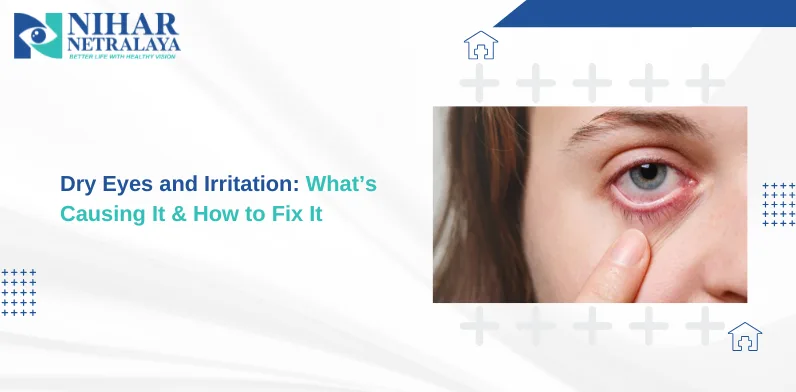
Dry eyes, known as आंखों में रूखापन (aankhon mein rookhapan) in Hindi, is one of the most common eye complaints we hear at Nihar Netralaya, Indore. Patients walk in saying, “My eyes feel dry and tired,” “my eyes burn at the end of the day,” or “why do my eyes feel so dry and irritated all the time?”
According to the WHO, around 339 million people worldwide suffer from dry eye disease, and over 30% of the global population experiences dry eyes and gritty sensations regularly. Yet most people delay seeing a doctor, assuming it will go away on its own.
Seeking timely consultation with the best eye consultant is crucial for accurate diagnosis and treatment. At a reputable eye hospital, professionals can guide you through treatments like LASIK treatment for refractive issues or even recommend cataract treatment if your symptoms are linked to age-related vision changes.
It usually does not, and the longer you wait, the more uncomfortable it gets. The good news is that dry eye syndrome is very manageable with the right diagnosis and treatment. Let us explain everything you need to know in simple words.
What is Dry Eye Syndrome and Its Types
Tears keep your eyes moist and protect them. Dry Eyes is a medical situation where either the eyes do not produce enough tears. Or the tears produced evaporate very fast, due to internal or external conditions.
- Aqueous Deficient Dry Eye (ADDE) – When your eyes don’t produce enough tears to stay moist. It’s often linked to ageing, autoimmune diseases like Sjogren’s syndrome, or damaged tear glands.
- Evaporative Dry Eye (EDE) – When your tears evaporate too fast. It’s usually caused by meibomian gland dysfunction. Here, the oil layer in tears is insufficient. Environmental factors like wind, pollution, or excessive screen time make the eyes feel dry and gritty.
Dry Eye Symptoms: You can’t ignore
Many people do not realise their eyes are dry until the discomfort becomes hard to ignore. Here is a quick checklist of the most common dry eye symptoms. If you identify with three or more of these, it is time to get your eyes checked:
- Burning or stinging sensation, especially by evening
- Gritty or sandy feeling, like something is stuck in the eye
- Eyes feel dry and sore after screen use
- Redness and irritation that comes and goes
- Blurred vision that clears temporarily when you blink
- Sensitivity to light or bright environments
- Watery eyes, yes, paradoxically, dry eyes can make your eyes water more
- Eye twitching triggered by dryness and irritation
- Eyes feel dry and tired after reading, driving, or working on a computer
- One eye feeling drier or more uncomfortable than the other
One thing many patients miss: Watery eyes also can actually be a sign of dry eye syndrome. When the eye surface becomes too dry, it sends a distress signal to the brain, which then produces a flood of reflex tears.
These tears do not have the right composition to soothe dryness, so the eye remains dry even while watering. If your eyes are always watering for no clear reason, do not ignore it.
Why Do My Eyes Feel Dry? All the Real Causes of Dry Eyes

There is rarely one single reason why eyes feel dry and irritated. In most patients, it is a combination of factors. Here are all the known causes explained simply:
Screen time and reduced blinking: Staring at phones, computers, or TV reduces how often you blink. Fewer blinks means tears evaporate faster, leaving the eye surface dry and scratchy.
Age: Tear production naturally slows down with age. People over 50 are far more likely to experience persistent dry eyes and irritation.
Environmental factors: Wind, dust, smoke, air conditioning and low-humidity environments all speed up tear evaporation. AC offices and long flights are common triggers.
Medical conditions: Diabetes, thyroid disorders including Hashimoto’s thyroiditis, autoimmune diseases like Sjogren’s syndrome, and rosacea all affect tear production or quality.
Hormonal changes: Women going through pregnancy, menopause or taking hormonal contraceptives are more prone to dry eyes due to hormonal shifts that affect the tear glands.
Medications that cause dry eyes: Several common medicines reduce eye moisture as a side effect:
| Medication Type | Examples |
|---|---|
| Antihistamines | Cetirizine, loratadine |
| Antidepressants | Amitriptyline, fluoxetine |
| Blood pressure medicines | Beta-blockers, diuretics |
| Decongestants | Pseudoephedrine-based cold medicines |
| Hormonal contraceptives | Birth control pills |
| Acne medications | Isotretinoin (Accutane) |
If you started a new medicine and noticed your eyes becoming dry soon after, speak to both your prescribing doctor and your eye specialist.
Contact lens overuse: Long-term or improper contact lens use reduces oxygen supply to the cornea and disturbs the natural tear film.
Nutritional deficiency: Low levels of Vitamin A and Omega-3 fatty acids directly affect tear quality and production.
Eye surgery: Procedures like LASIK can cause temporary dry eyes during recovery as the corneal nerves heal.
What Causes Dry Eyes All of a Sudden?
Many patients come to us saying, “I never had dry eyes before. Why did this start suddenly?” Sudden-onset dry eyes are more common than you think, and they are almost always triggered by a specific change. Here is what typically causes a sudden flare-up:
- A new medication: Especially antihistamines, antidepressants or blood pressure medicines started recently
- Change in environment: Moving to a drier climate, starting a new job in an air-conditioned office, or increased travel
- Hormonal shift: Pregnancy, menopause, or starting/stopping hormonal contraceptives
- Seasonal allergies: Allergens irritate the eye surface and disrupt the tear film
- Increased screen time: A sudden change in work habits (like working from home on a laptop all day) drastically reduces blink rate
- Illness or infection: Some viral infections temporarily affect tear production
- Recent eye surgery: LASIK and other refractive surgeries can cause temporary dry eyes during healing
When is sudden dry eye a concern? If only one eye feels dry suddenly, especially if it is also blurry or painful, do not wait. Sudden dry eye in one eye can sometimes indicate a blocked tear duct, nerve issue, or eyelid problem that needs prompt evaluation. Come in and let us check it.
Dry Eye in One Eye Only: Why Does It Happen?
Most people assume dry eye always affects both eyes equally. But it is very common to experience one eye feeling drier, more irritated or blurrier than the other. Here is why this can happen:
- One eye may be more exposed to wind, dust or screen glare based on how you sit or sleep
- A blocked meibomian gland or eyelid problem may affect only one side
- Nerve damage from an old injury or surgery may reduce tear production in one eye
- An asymmetric refractive error can cause one eye to work harder, leading to more fatigue and dryness
If one eye consistently feels dry and blurry and this does not improve with lubricating drops, it is important to get a proper eye examination. Relying on drops alone without knowing the cause can delay the right treatment.
Risk Factors – Why Eyes Feel Scratchy?

Risk factors for dry eye disease are the ones that actually impact natural flow of tears production (which keeps the eyes moist naturally). These are:
- Eyelid problems like ectropion (the eyelid turns outward).
- Low humidity environments, such as airplane cabins, AC offices etc.
- Neurological conditions like Parkinson’s disease can reduce the blink rate. This will create unstable tears production.
- Rosacea and other skin disorders affect the eyelids and cause inflammation. This will be impacting tear gland function to make eyes feel dry and sore.
- Radiation therapy around the head or neck.
- Deficiency of omega-3 fatty acids.
- Chronic allergies and frequent use of preserved eye drops.
If your eyes often feel gritty, sore or tired, you must consult a medical expert immediately.
Dehydrated Eyes vs Dry Eye Syndrome: Are They the Same?
Many patients ask, “Can not drinking enough water cause dry eyes?” The answer is yes, dehydration does affect tear production. But dehydrated eyes and dry eye syndrome are not exactly the same thing.
| Dehydrated Eyes | Dry Eye Syndrome | |
|---|---|---|
| Cause | Not drinking enough water, excessive caffeine or alcohol | Tear gland dysfunction, meibomian gland blockage, medical conditions |
| How it feels | Tear gland dysfunction, meibomian gland blockage, and medical conditions | Persistent burning, grittiness, redness, blurred vision |
| Fix | Drinking more water usually helps within hours | Requires proper diagnosis and targeted treatment |
| Duration | Temporary | Can be chronic if untreated |
If increasing your water intake and reducing screen time for a couple of days does not improve how your eyes feel, it is likely more than just dehydration. A proper dry eye evaluation will give you a clear answer.
How is Dry Eye Diagnosed?

Doctors now use advanced methods to diagnose dry eye disease.
- Inflammatory Marker Testing – it checks specific proteins in your tears to detect inflammation often linked to dry eye.
- Osmolarity Testing – it measures the salt concentration in your tears. An imbalance here signals that eyes feel dry and gritty.
- Blink Analysis Technology is also used to track how often and how fully you blink. Incomplete blinking can cause dryness.
- Metabolomics studies the chemicals in your tears to spot early signs of dry eye.
- Keratograph imaging takes detailed pictures of the eye’s surface and checks tear glands. Deep learning technology measures tear levels.
- AI-based meibography analyses tear gland health using smart imaging.
- 3D ocular surface mapping creates a 3D picture of the eye to check dryness.
- Special tear film tests measure how fast your tears evaporate.
What To Do If You Experience Dry Eyes:
- Start by resting your eyes. You will need to follow the 20-20-20 rule – Every 20 minutes you look at something 20 feet away for 20 seconds or more.
- Secondly, as per medical advice, use artificial tears or lubrication drops, as per your eye condition. These should be preferably preservative-free drops.
- Thirdly, always stay hydrated by drinking enough water daily.
- In case you work in a dry environment like where AC is used more often, then your eye feels dry and sticky often. In that case, you need to modify your environment by using a humidifier. Or should be avoiding direct air from fans or air conditioners.
- Blink more often, especially when using TV, Mobile Phone, or Computer screens.
- Eat omega-3-rich foods like flax seeds and fish.
- Despite doing all the above under medical supervision, if further eyes feel dry and tired, then you have to undergo specialized treatment. We are sharing the next:
Treatment When Eyes Feel Dry and Sore:

If your eyes feel constantly dry and uncomfortable, there are the latest and advanced treatments for dry eyes. With the right care, your eyes can feel comfortable and refreshed again.
- Intense Pulsed Light (IPL) therapy eases inflammation and helps your tear glands work better. Scleral lenses act like a soothing shield. These will keep your eyes moist.
- Doctors may also suggest platelet-rich plasma (PRP) eye drops as per your eye condition. These drops use your body’s healing power to repair your eyes.
- In some cases, doctors employ nerve stimulation devices. These gently encourage natural tear production. In other cases, thermal pulsation also clears blocked glands. This will be restoring healthy tear flow. Depending on eye condition, in some cases, even Lipiflow Therapy uses heat and gentle pressure to clear blocked oil glands.
- Even simple changes like adding omega-3 to your diet can improve tear quality.
Eye Drops for Dry Eyes: What Are Your Options?
One of the most common things patients search for is “which eye drops are best for dry eyes?” Here is a simple guide to understanding the types of drops available, so you can have an informed conversation with your doctor:
| Type of Eye Drop | What It Does | Best For |
|---|---|---|
| Lubricating / Artificial Tears | Replaces the water layer of the tear film | Mild to moderate dry eyes from screen use or environment |
| Preservative-Free Drops | Thicker consistency; stays on the eye surface longer | People who need drops more than 4 times a day or have sensitive eyes |
| Gel-Based Drops | Thicker consistency; stays on eye surface longer | Moderate to severe dry eyes; good for nighttime use |
| Lipid-Based Drops | Replaces the oil layer of tears; reduces evaporation | Evaporative dry eye caused by meibomian gland dysfunction |
| Medicated / Prescription Drops | Reduces inflammation in the eye surface | Chronic dry eye syndrome not responding to lubricants |
Important: Do not self-medicate with drops for more than a few days without consulting an eye specialist. Using the wrong type of drop or using drops with preservatives too frequently can actually worsen dry eye symptoms over time.
At Nihar Netralaya, Dr Mahesh Garg will identify your exact type of dry eye and recommend the most suitable drop for your specific condition.
Can Dry Eyes Cause Eye Twitching?
Yes, and this is more common than most people realise. Eye twitching (involuntary eyelid spasms) is often linked to dry eye irritation. When the eye surface is chronically dry, the nerves around the eyelid become overstimulated, which can trigger twitching, especially in the lower eyelid.
Other contributing factors include screen fatigue, caffeine, and stress, which often go hand in hand with dry eyes. If your eye twitches frequently and also feels dry or gritty, treating the underlying dry eye condition often resolves the twitching as well.
When is eye twitching a concern? If the twitching is strong, affects the whole eye area, or does not stop within a few weeks, it needs to be evaluated, as it can occasionally indicate a neurological issue unrelated to dry eyes.
What to Do When My Eyes Feel Dry and Irritated:

Seek medical advice early to check the current condition of your eyes. And under medical supervision:
- Use preservative-free eye lubricant drop drops.
- Take regular breaks from screens.
- Stay hydrated, blink often while using a screen.
- Ddd omega-3 to your diet.
- Wear wraparound sunglasses in windy or sunny conditions.
- Prioritise proper sleep/eye rest and care for overall eye health.
When Should You See a Doctor for Dry Eyes?
Do not wait too long. See an eye specialist if:
- Your eyes feel dry, gritty or sore for more than 2 weeks despite using lubricating drops
- Only one eye feels dry, especially if it is also blurry or painful
- Your vision is blurring more frequently or not clearing when you blink
- You have eye pain, not just discomfort, along with dryness
- Your eyes are consistently red, and redness does not improve
- You recently started a new medication, and dry eyes began around the same time
- You have diabetes, thyroid disease or an autoimmune condition; these need professional monitoring of eye health
- Your dry eyes are affecting your work, reading or driving
At Nihar Netralaya, Indore, Dr Mahesh Garg uses advanced diagnostic tools, including AI-based meibography, osmolarity testing and 3D ocular surface mapping to identify the exact type and cause of your dry eye, so the treatment is always targeted, not generic.
Conclusion:
Dry eyes and irritation can be managed effectively with the right diagnosis and treatment. If you’re experiencing persistent symptoms, visiting a best eye hospital or consulting an eye specialist is important to determine the underlying cause.
Whether it’s due to environmental factors, age-related changes, or conditions requiring LASIK treatment or cataract treatment, seeking timely professional care is crucial. A best eye doctor can guide you through personalized treatment options including solutions offered by a contact lens clinic.
Additionally, following recommended treatments and using prescribed medications from an eye clinic pharmacy will help relieve discomfort and restore eye health. Your eyes make you see this beautiful world, so do not ignore their health!
FAQs:
Dry eyes happen when your tear film is insufficient or unstable. Common causes include prolonged screen use, ageing, air conditioning, contact lens overuse, medications, and medical conditions like diabetes or thyroid disorders. If symptoms persist beyond two weeks, see an eye specialist.
One eye can feel drier due to a blocked meibomian gland, eyelid problem, unequal screen exposure, or nerve-related issue on one side. If one eye consistently feels dry and blurry and does not improve with lubricating drops, get a proper eye examination.
This is one of the most common confusions. When the eye surface becomes too dry, it sends a distress signal to the brain, which floods the eye with reflex tears. These tears do not have the right composition to soothe dryness so the eye stays dry even while watering. Persistently watery eyes should always be evaluated.
Yes. Thyroid conditions, including Hashimoto’s thyroiditis, affect the hormones that regulate tear production and also cause eyelid changes that worsen dry eye symptoms. If you have a thyroid condition and are experiencing dry eyes, mention both to your eye specialist.
Common culprits include antihistamines, antidepressants, blood pressure medications (especially beta-blockers), decongestants, hormonal contraceptives, and acne medications like isotretinoin. If your dry eyes began after starting a new medicine, speak to your doctor about alternatives.
End-of-day eye burning is a classic sign of dry eye worsened by sustained screen use. Throughout the day, reduced blinking depletes the tear film progressively. By evening, the eye surface is significantly drier, causing burning, soreness and fatigue. The 20-20-20 rule (every 20 minutes, look 20 feet away for 20 seconds) helps slow this progression.
Yes. Chronic dryness inflames the eye surface, which causes visible redness and irritation. Redness from dry eyes tends to come and go and is usually accompanied by other symptoms like grittiness or burning. Persistent redness without these symptoms may have a different cause and should be evaluated separately.
Not necessarily. Many cases of dry eye syndrome are very manageable with the right treatment ranging from lubricating drops and lifestyle changes to advanced therapies like IPL or LipiFlow. Some patients achieve long-term relief. However, without treatment, chronic dry eye can worsen over time and affect vision quality. Early intervention gives the best outcomes.
